Accessibility links
  • Skip to main content
News Icon NEWS FILTER
All News Scams & Phishing Your Security Mobile Security Identity Theft Corporate Security Security Education Videos
Search Icon SEARCH
 

Email Icon SUBSCRIBE TO WEEKLY NEWSLETTER
No Organization is Safe from Ghost Ransomware
Facebook   X   LinkedIn   Email

No Organization is Safe from Ghost Ransomware

August 10, 2025

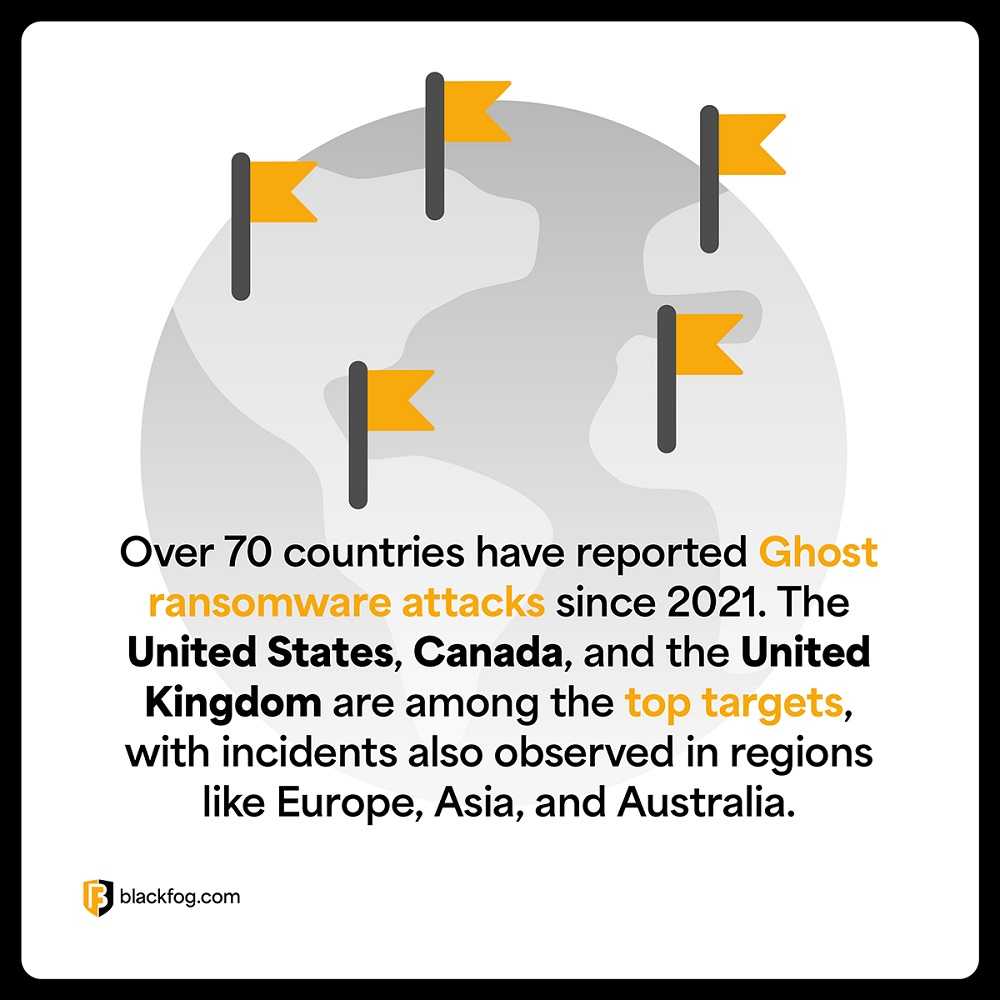
Both the FBI and CISA (Cybersecurity and Infrastructure Security Agency) recently released a warning about a ransomware group called Ghost. This Chinese state-sponsored threat group means business, targeting everything from critical infrastructure and schools to healthcare and religious organizations. They also warn no organization of any kind is safe from Ghost attacks. Here’s what you need to know, now.

A Ransomware Group by Any Other Name

By changing tactics for hooking victims, Ghost is also known by a host of other names including Phantom, Cring, Strike, Rapture, Crypt3r and Hello. By whatever name, this threat group has successfully attacked organizations since 2021 and shows no end in sight.

Typically, Ghost ransomware enters an organization by exploiting CVEs (common vulnerabilities and exposures) to gain access to a system. Once inside, Ghost doesn’t stay long like other ransomware groups. These groups typically stay for weeks to months checking out different networks, planting various malware types, and deciding what information to ransom. Ghost is known to sweep into a system and deploy ransomware on the same day. 
Ghost ransom notes get sent via legitimate email services and threaten to sell a victim’s hijacked data if the ransom demand isn’t paid. The FBI says, “Data encrypted with Ghost ransomware variants cannot be recovered without the decryption key…” Ghost actors, they warn, usually demand ransoms up to hundreds of thousands in cryptocurrency for decryption.

Keeping Ghost Away

Email phishing is one of Ghost’s tactics for entering a system. Since 91% of cybercrime gets delivered via phishing, pay special attention to its red flags. An unknown email sender or address, suspicious links and attachments and requiring sensitive PII like passwords for accounts are all email phishing red flags, as is some sense of urgency to take action.

Always keep system and other software updated with the latest security patches and bug fixes so known vulnerabilities aren’t exposed. The same goes for anti-virus software so it helps catch the latest malware threats. 

No organization wants to hear Ghost rattling its ransomware chains. So, stay alert and do all you can to prevent being the next victim.


Scattered Spider’s Web Of Lies, Deception And Ransomware

Your Security

Scattered Spider’s Web Of Lies, Deception And Ransomware

Warnings from the FBI and CISA came in loud and clear recently…Scattered Spider’s cyberattacks are more hazardous and crippling than ever before. Their high-profile, financially motivated attacks rely on social engineering for data theft, extortion, and ransomware attacks. And when both security agencies release a joint advisory warning to us about this threat group, it’s smart to listen. These threat actors made headlines for crippling financial attacks against several large organizations recently and they've increased the stakes playing their games. READ FULL STORY

FBI Warns Medusa is Trying to Snake Her Way Into Your Network

Your Security

FBI Warns Medusa is Trying to Snake Her Way Into Your Network

The Federal Bureau of Investigation (FBI) and the Cybersecurity and Infrastructure Security Agency (CISA) recently issued a warning about a ransomware-as-a-service variant that has been on the attack since December. The Medusa ransomware, a sophisticated cyber threat that has targeted over 300 victims across critical infrastructure sectors. These include, healthcare, education, and manufacturing. The group employs tactics such as phishing campaigns and exploiting unpatched software vulnerabilities to gain unauthorized access to systems. READ FULL STORY

IRS “Dirty Dozen” Tax Scams for Season of 2024

Scams & Phishing

IRS “Dirty Dozen” Tax Scams for Season of 2024

Beginning in 2002, the IRS has released its list of the top twelve tax scams. They call it the “Dirty Dozen” campaign. Every year, the agency takes a look at the most prevalent tax scams affecting U.S. taxpayers to help keep us all safe from tax fraudsters. They also remind us that although scams increase during tax time, which is starting right about now, they still happen year-round. We’ll pick a few notable ones to explain in this article. READ FULL STORY


Close
Fraud News & Alerts!

Keep up with the latest cyber security news through our weekly Fraud News & Alerts updates. Each week you will receive an email containing the latest cyber security news, tips and breach notifications.


You're all set!

You will receive your first official security update email within the next week.

A welcome email has also just been sent to you. If you do not receive this email within the next few minutes, please check your Junk box or spam filter to confirm our emails are not being blocked.


Help  
Enter any word or words you like.        

The email newsletter will arrive from news@stickleyonsecurity.com


Loading
Please wait...