Accessibility links
  • Skip to main content
News Icon NEWS FILTER
All News Scams & Phishing Your Security Mobile Security Identity Theft Corporate Security Security Education Videos
Search Icon SEARCH
 

Email Icon SUBSCRIBE TO WEEKLY NEWSLETTER
FBI Warns of Surge in Account Takeover Scams Targeting Everyone
Facebook   X   LinkedIn   Email

FBI Warns of Surge in Account Takeover Scams Targeting Everyone

February 23, 2026

The FBI’s Internet Crime Complaint Center issued an alert in about sophisticated account takeover schemes that are draining victims’ financial accounts, including investment portfolio accounts. And it’s not a slow-moving scam either. It’s moving at an alarming rate, and everyone should take care not to fall victim.

The Warning

Cybercriminals are exploiting vulnerabilities in online accounts to steal funds, with losses reaching millions of dollars. The FBI reports these attacks are becoming increasingly sophisticated and difficult to detect.

How the Scams Work

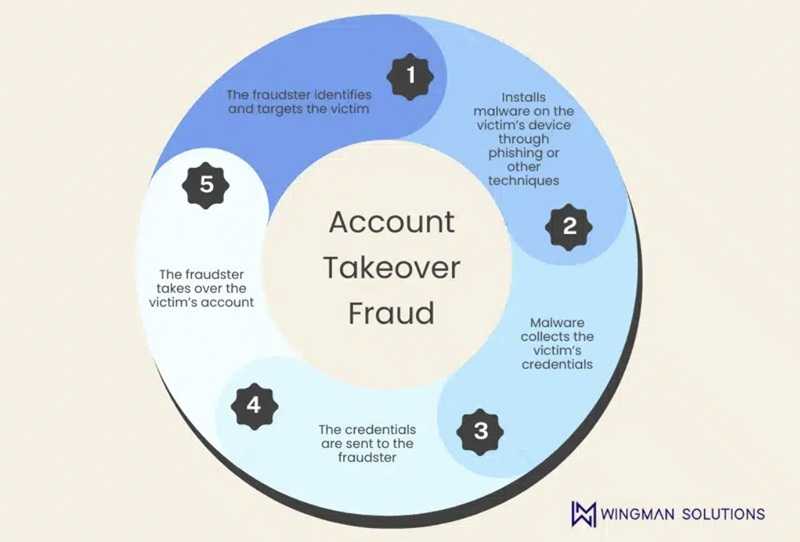
Fraudsters use phishing emails, text messages, or phone calls impersonating legitimate financial institutions to trick victims into revealing login credentials. Once accessed, criminals quickly transfer funds, change account settings, and lock out the rightful owner. Some scammers also employ malware or exploit weak passwords to gain unauthorized access.
Who’s Being Targeted

While anyone with online accounts is vulnerable, criminals particularly target elderly individuals, small business owners, and those with substantial investment accounts. Victims often don’t realize their accounts have been compromised until significant funds have disappeared.

Protecting Yourself

The FBI recommends enabling multi-factor authentication on all accounts, using unique complex passwords, and never clicking links in unsolicited messages. Monitor accounts regularly for suspicious activity and contact financial institutions directly using verified phone numbers, not contact information provided in suspicious communications. Be skeptical of urgent requests for personal information, and immediately report suspected fraud to your bank and IC3.gov.

As is good practice when looking into any text or email, go directly to your account using a trusted link or call the institution using a phone number you find yourself. Never reply to the contact information in these messages.

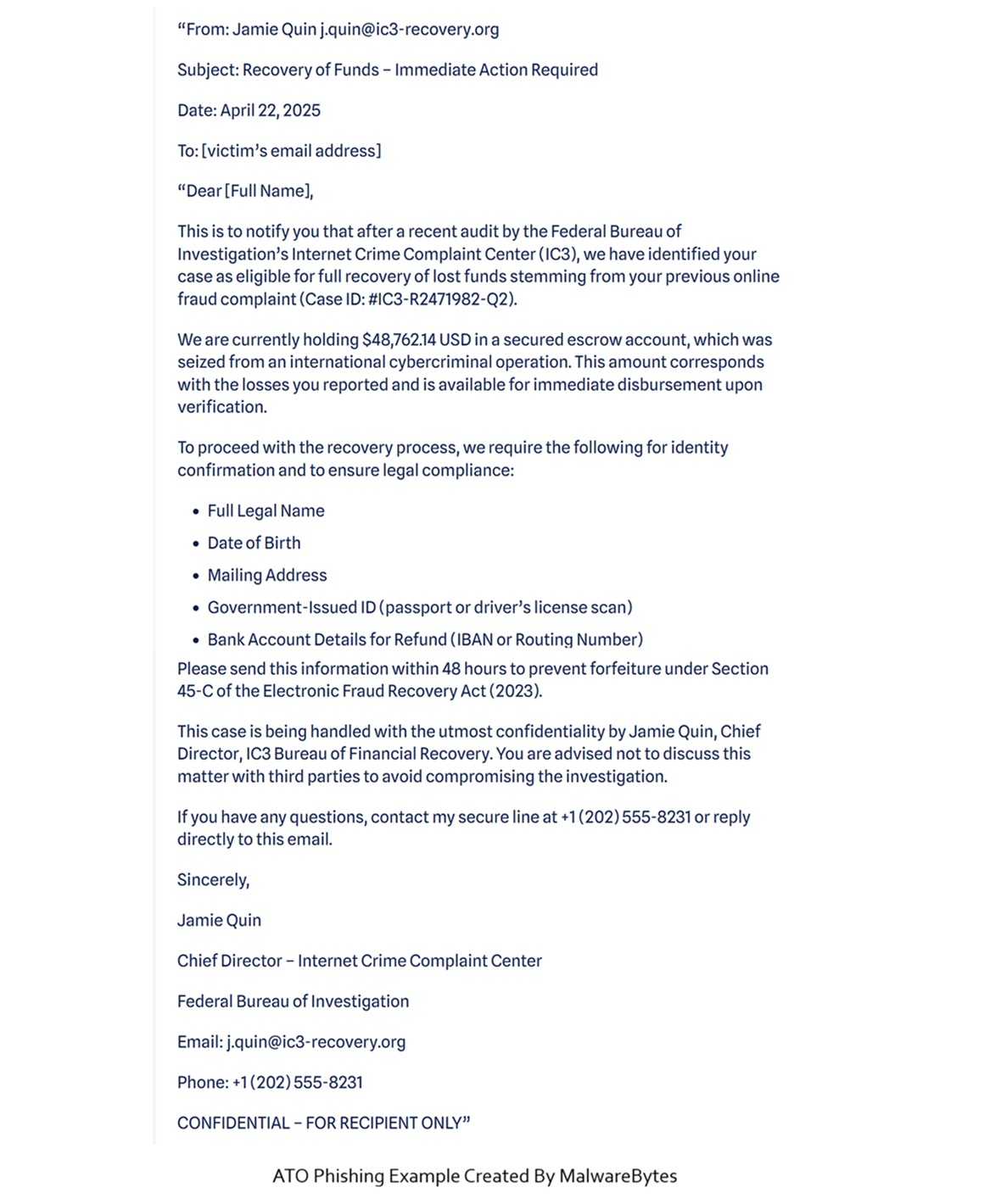
Below is an example of the phishing email going around created by Malwarebytes:

Before You Unsubscribe, Know This First

Scams & Phishing

Before You Unsubscribe, Know This First

Bad actors are everywhere these days, and now they’re behind the latest “unsubscribe” email phishing scam. We all know how invasive spam emails are, and keeping them from flooding your inbox is but a dream. And now, clicking the unsubscribe button is a devious way to infect your device with malware.  Hackers are now setting up bogus “Unsubscribe” buttons that can really frustrate you. Fortunately, there is some help. Here’s what you need to know. READ FULL STORY

Account Takeover Fraud Steals Your Identity, Money, And More

Identity Theft

Account Takeover Fraud Steals Your Identity, Money, And More

With a significant swell in the number of those working from home, come the most historic levels of hacking the world has ever seen. Account takeover (ATO) fraud attacks have been growing yearly, accounting for much of the identity fraud-based financial losses to consumers and businesses. ATO fraud can lead to empty bank accounts and damaged reputations, and those recovering from an attack find it’s an expensive, time consuming, and frustrating task. READ FULL STORY

The Reality Of Growing ATO Cross-Platform Attacks

Your Security

The Reality Of Growing ATO Cross-Platform Attacks

Organizations are highly vulnerable to account takeover (ATO) attacks, and the reality is just last year, 83% have experienced one of them. The damage done by these security breaches is harmful enough, but when they lead to cross-platform attacks, it’s a security red alert for system admins and the organizations they protect. With increased cloud entry points, each opening provides its own unique risk for an organization’s security across multiple platforms. READ FULL STORY

Account Hijacking – Keep Yours From Cyberthieves

Your Security

Account Hijacking – Keep Yours From Cyberthieves

Most of us would agree there are too many ways our sensitive PII ends up in the hands of cybercriminals. One of these ways is account hijacking and few users, if any, are spared from this cyberthreat. This type of identity theft can happen without us knowing until it’s too late, but we can help prevent it. A closer look at this all-too-common cybercrime, also called account takeover, can help to make us cyber-smarter and our accounts and PII safer. READ FULL STORY

Can Using The Same Password Lead To A Stolen Car?

Your Security

Can Using The Same Password Lead To A Stolen Car?

In an age where cybercrime is increasingly sophisticated, it’s no surprise that criminals are using open-source tools to automate the process of cracking online accounts. This is especially true when it comes to mass password cracking or credential stuffing. This dangerous trend has allowed cybercriminals to make a lot of money with very little time or effort. This time, they're going after something you may not expect from cybercriminals...your vehicle! READ FULL STORY


Close
Fraud News & Alerts!

Keep up with the latest cyber security news through our weekly Fraud News & Alerts updates. Each week you will receive an email containing the latest cyber security news, tips and breach notifications.


You're all set!

You will receive your first official security update email within the next week.

A welcome email has also just been sent to you. If you do not receive this email within the next few minutes, please check your Junk box or spam filter to confirm our emails are not being blocked.


Help  
Enter any word or words you like.        

The email newsletter will arrive from news@stickleyonsecurity.com


Loading
Please wait...