Accessibility links
  • Skip to main content
News Icon NEWS FILTER
All News Scams & Phishing Your Security Mobile Security Identity Theft Corporate Security Security Education Videos
Search Icon SEARCH
 

Email Icon SUBSCRIBE TO WEEKLY NEWSLETTER
A Quick Look at a Verizon’s Data Breach Investigations Report
Facebook   X   LinkedIn   Email

A Quick Look at a Verizon’s Data Breach Investigations Report

August 22, 2026

Since 2008, Verizon’s Verizon Data Breach Investigations Report (DBIR) has tracked the pulse of business data breaches and how cybercrime improvements and trends can affect us all. So, whether we’re employees, everyday users or both, there’s one thing we all have in common – we’re human. And that’s exactly what cybercriminals are counting on and what makes them successful.

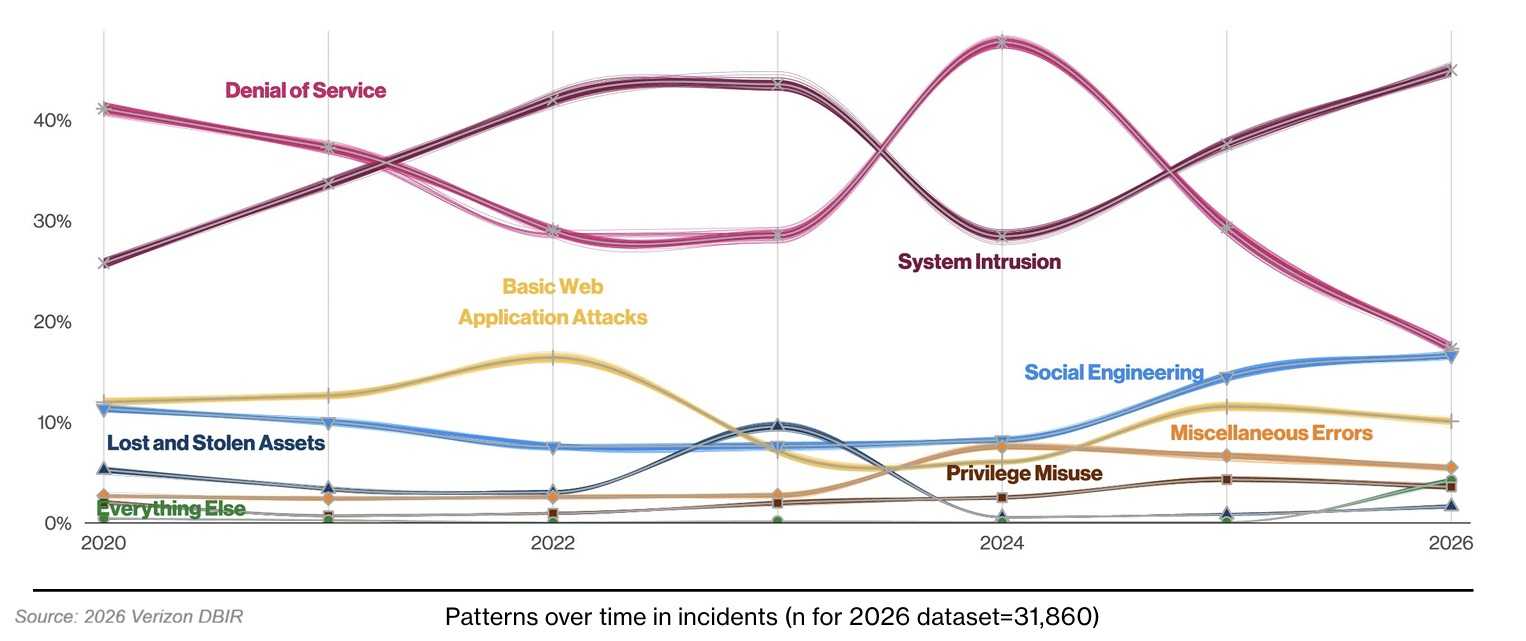
It’s All About the Benjamins. The DBIR shows that 44% of breaches involved ransomware. Add to that, companies paid crooks a median amount of $115,000 per incident last year. Espionage is still on the list as well. Those came in at 17% of data breaches. The report found that 28% of the state-sponsored events they found were financially motivated.

System Updates and Patches not Fast Enough. The DBIR shows how software and system vulnerabilities get exploited long before businesses know they exist, much less releasing fixes for them. It finds attacks peaked 17 days after hackers discovered these flaws, not nearly fast enough to prevent the attacks that resulted. The DBIR finds businesses need to step-up monitoring and prioritize quickly releasing software patches and updates to fix flaws.
Partners in Crime. As we know, once a third party is involved, we lose some control over what happens to the data they manage. The report found that indeed, the percentage of breaches involving a third party doubled from 2024 to 30%.

And Then There is AI. While using generative AI to be more productive can be beneficial, it can also lead to unintentional data leaks. The DBIR found that 15% of employees accessed these systems roughly every 15 days. While that may not be a big concern on its own, 72% of them were accessing them using a non-work email address or they were using their corporate credentials without integrated authentication systems.

Other notable stats:

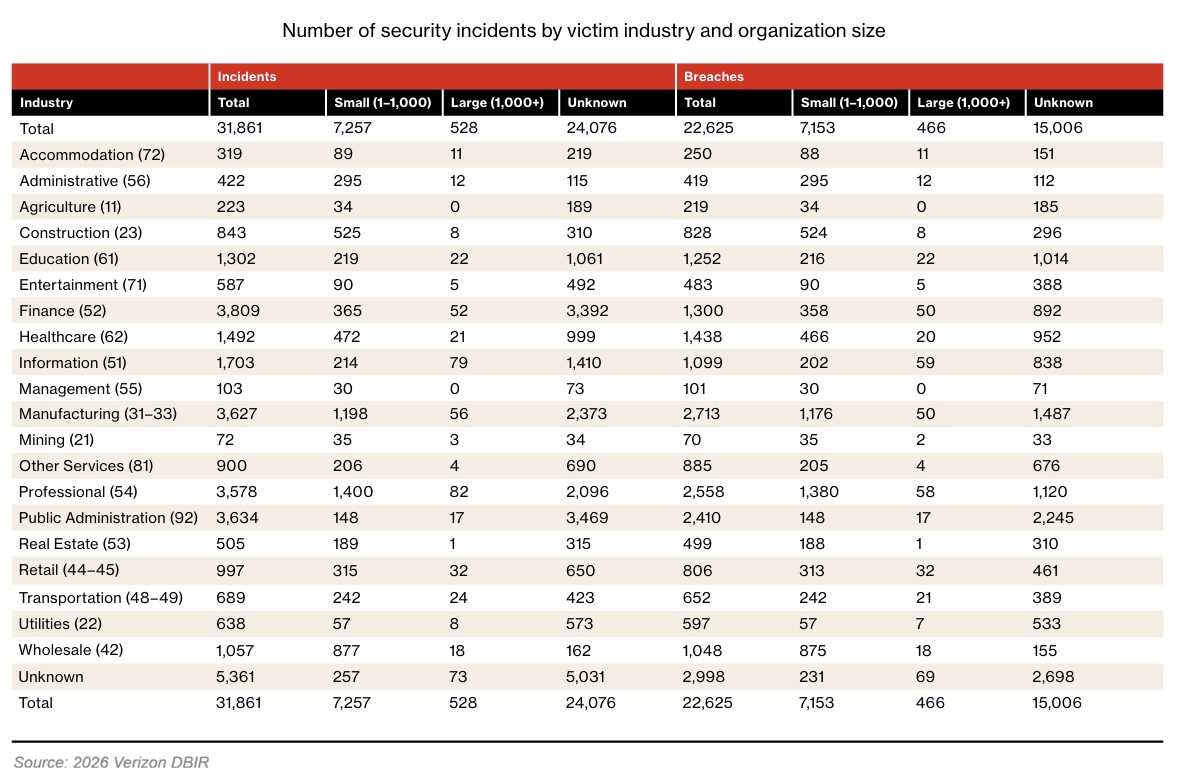
Of all the industries targeted, healthcare is now the top target. Of 1,710 incidents, 1,542 had confirmed data disclosure. System intrusion, which includes ransomware, is the top culprit.

Ninety percent of those in the financial and insurance sector are financially motivated and 78% of the threat actors are external. 
Within the manufacturing sector, 90% of organizations that experienced a breach were SMBs with less than 1,000 employees.

The retail industry is still a major target, but the information sought is changing. Where it used to be payment card information, the switch to digital wallets and other types of payments have made that more difficult for attackers. Therefore espionage-related attacks have risen and it’s no surprise that 100% of the threats here are financially motivated.

The public sector is not left out. According to the report, “attackers are not easing up on government targets. Ransomware remains a major threat, hitting 30% of breaches across all levels of government. Errors remain a persistent issue, with Misdelivery in the lead.”

Bigger data security budgets don’t automatically translate to a cyber-secure business. That’s why cyber-education is still the best answer for a secure environment at work and at home. After all, we’re only human.


Your Financial Institution Is Calling. Or Is It?

Scams & Phishing

Your Financial Institution Is Calling. Or Is It?

A phone call that looks like it’s coming from your financial institution could be the opening move in a fast-moving chess game the FBI is warning about. Using spoofed numbers and convincing scripts, criminals create a sense of urgency, claiming your account is under attack. The next move includes a carefully guided attempt to extract passwords, verification codes, or even push you to move your own money straight into their hands. Knowing when to hang up could be the difference between staying secure and watching your account drained in a flash. READ FULL STORY

Simple Habits That Make You a Tougher Target for Cybercrooks

Your Security

Simple Habits That Make You a Tougher Target for Cybercrooks

It’s already well into the new year and a fresh year usually brings fresh goals—exercise more, spend less, maybe try a new hobby. But one resolution that deserves a permanent spot on everyone’s list is tightening up your personal cybersecurity. Cyberthreats don’t take holidays, and scammers aren’t slowing down. In fact, they’re getting bolder, trickier, and faster at finding new ways to get into your accounts and steal your money or data. READ FULL STORY

A Scammer Can Wreak Havoc With Your Online Banking Account Number

Your Security

A Scammer Can Wreak Havoc With Your Online Banking Account Number

Most people know to protect their Social Security number, debit card PIN, or online banking password. But many don’t realize that something far more ordinary—your bank account number—can also be a goldmine for scammers. It may not seem sensitive at first glance (after all, it’s printed on every check), but in the wrong hands, it can lead to serious financial trouble. While banks often catch suspicious activity, scammers know that many people don’t check their accounts daily, giving them time to slip transactions through. READ FULL STORY

Think Your Business Is Too Small For Hackers? It’s Time To Think Again

Corporate Security

Think Your Business Is Too Small For Hackers? It’s Time To Think Again

There’s a false sense of security when SMB owners believe hackers aren’t interested in a small company. The assumption is that bad actors will just move on to bigger and better targets with much more to steal. Unfortunately, that really couldn't be more wrong. There’s plenty of valuable data worth stealing from small businesses. Hijacked information like credit card details, passwords, and other PII is equally as useful and destructive, and if stolen can also lead to supply chain attacks, where info stolen from smaller businesses can be used to catch bigger fish. READ FULL STORY

AI Becomes Criminals' New Ally with the Emergence of FraudGPT

Your Security

AI Becomes Criminals' New Ally with the Emergence of FraudGPT

The digital landscape is facing a fresh threat: FraudGPT. This nefarious AI tool, hanging around at the backdoor of WormGPT, first popped up on July 22, 2023. Numerous underground websites and private Telegram channels were the first to notice its presence. What sets FraudGPT apart from other cyber threats is its versatility—it's a multi-purpose tool designed for an array of illicit activities. And once inside your computer, this software can wreak significant havoc. READ FULL STORY


Close
Fraud News & Alerts!

Keep up with the latest cyber security news through our weekly Fraud News & Alerts updates. Each week you will receive an email containing the latest cyber security news, tips and breach notifications.


You're all set!

You will receive your first official security update email within the next week.

A welcome email has also just been sent to you. If you do not receive this email within the next few minutes, please check your Junk box or spam filter to confirm our emails are not being blocked.


Help  
Enter any word or words you like.        

The email newsletter will arrive from news@stickleyonsecurity.com


Loading
Please wait...