Accessibility links
  • Skip to main content
News Icon NEWS FILTER
All News Scams & Phishing Your Security Mobile Security Identity Theft Corporate Security Security Education Videos
Search Icon SEARCH
 

Email Icon SUBSCRIBE TO WEEKLY NEWSLETTER
Invoice Phishing’s Hidden Agenda
Facebook   X   LinkedIn   Email

Invoice Phishing’s Hidden Agenda

October 7, 2026

There’s a not-so-new cybercrime hitting inboxes everywhere and it’s using phishing invoices to install a variety of malware, including an info-stealer. While some of us regularly get invoices in our inbox for this or that, we should all be aware of this invoice-themed phishing attack that’s likely to show up to collect payment in your email soon.

This attack starts with getting an email saying a package has been delivered and there’s an invoice attached. Getting an email like this, especially for something we didn’t buy, can instill fear, panic, anger, and other reactions. These strong emotions understandably lead us to opening the invoice, and that sets the attack in motion. Hackers expect these reactions from us and in this phishing attack, it’s their “gotcha” moment.

Once the attachment is opened, attackers have a bunch of malware plug-ins at their disposal, depending on their goal. From all accounts, it’s a sophisticated attack full of smoke screens and evasion techniques. Installing VenomRAT, a “multi-purpose” Remote Access Trojan that’s also for sale on the Dark Web, gives the hacker control over the attack.
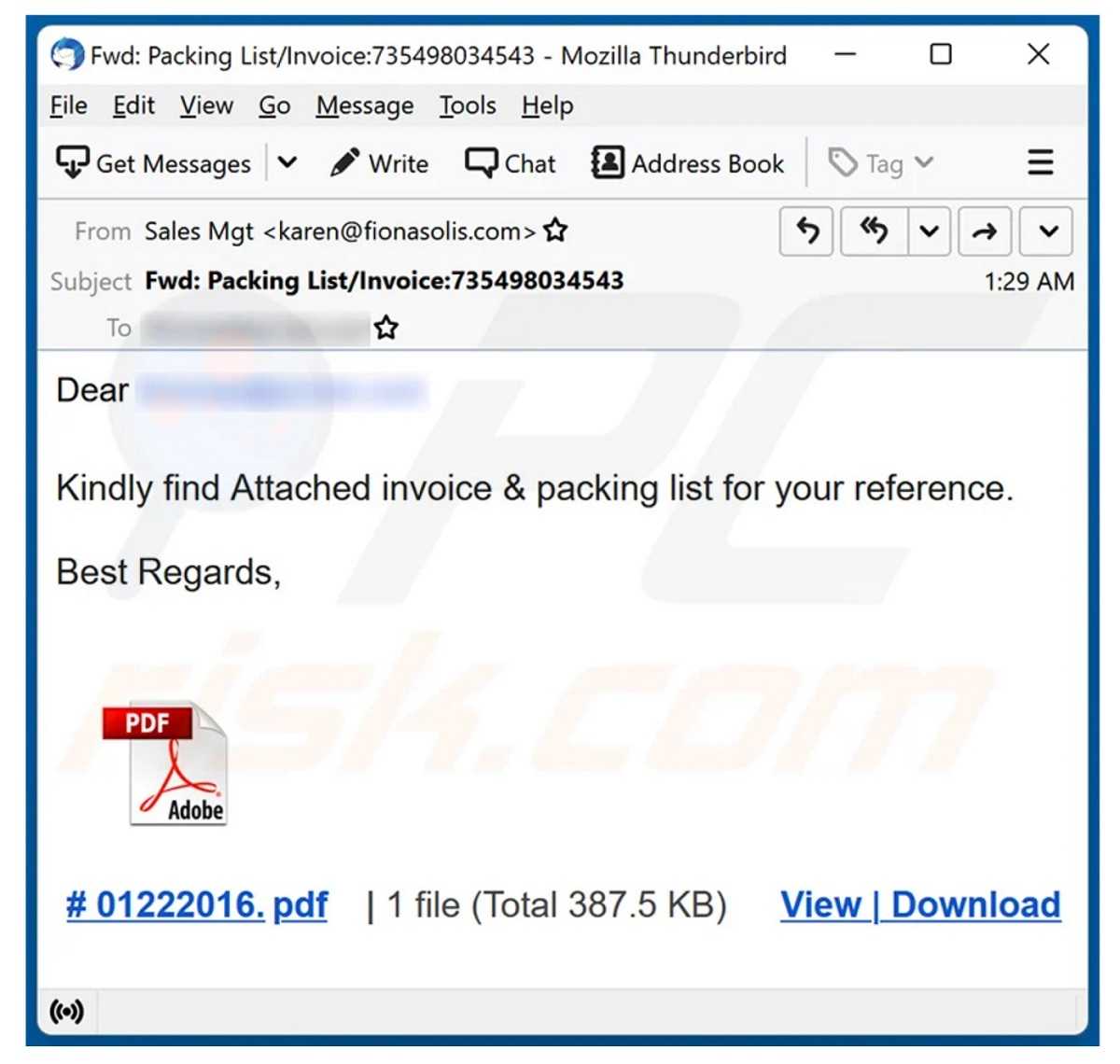
Among various talents, VenomRAT is also an info-stealer. This RAT sends the hacker a victim’s keystrokes, records camera use, and steals valuable PII. Some of that stolen PII includes credit card details, crypto wallet data, passwords, desktop files, browser data, and cookies. What crimes a hacker commits with this information is known only to them until a victim realizes something is terribly wrong — and by then it’s usually too late.

As everyday users, it can sometimes feel like the deck is stacked against us. This invoice phishing attack, like most others, takes advantage of us being human. Since humanity is something we can’t avoid, knowing phishing red flags when we see them should be part of our daily cyber-smart routine. Like this attack, look out for those signs: Typos and grammar errors, blurry graphics, anything that tickles the back of your neck. Unexpected emails with attachments and/or links should all be suspect, especially when they elicit a strong reaction from us. So, stay cyber-smart, stay calm, and kick invoice phishing to the curb.


Email Scams Threaten Extortion And Blackmail

Scams & Phishing

Email Scams Threaten Extortion And Blackmail

An uptick in email scams has cybersecurity professionals concerned, and for good reason. Symantec researchers found that in the first five months of 2019, they prevented almost 300 million extortion email attacks from going forward. Just some of those discovered include blackmail, sextortion, bombs, hit men, and malware threats. The researchers also determined the average cost of paying demands over a 30 day period was $1.2 million in 243 Bitcoin transactions. READ FULL STORY

Online Security Tips From The BBB

Your Security

Online Security Tips From The BBB

Champions of consumers that they are, the Better Business Bureau (BBB) posted a warning reminder on their website about some of the risky online scenario’s consumers face every day. Keeping cyber safety in the forefront of our online activities isn’t always easy, but it’s always possible to do. The BBB knows this and wants consumers to be aware of some of the latest cyber scams and just how truly slippery they can be. It’s well-worth heeding what the BBB has to say about cybercrime and how to avoid the pitfalls that every hacker hopes we fall into. READ FULL STORY


Close
Fraud News & Alerts!

Keep up with the latest cyber security news through our weekly Fraud News & Alerts updates. Each week you will receive an email containing the latest cyber security news, tips and breach notifications.


You're all set!

You will receive your first official security update email within the next week.

A welcome email has also just been sent to you. If you do not receive this email within the next few minutes, please check your Junk box or spam filter to confirm our emails are not being blocked.


Help  
Enter any word or words you like.        

The email newsletter will arrive from news@stickleyonsecurity.com


Loading
Please wait...