Accessibility links
  • Skip to main content
News Icon NEWS FILTER
All News Scams & Phishing Your Security Mobile Security Identity Theft Corporate Security Security Education Videos
Search Icon SEARCH
 

Email Icon SUBSCRIBE TO WEEKLY NEWSLETTER
Did Your Browser Crash? A Helpful Hacker Will Help You Fix It
Facebook   X   LinkedIn   Email

Did Your Browser Crash? A Helpful Hacker Will Help You Fix It

August 30, 2026

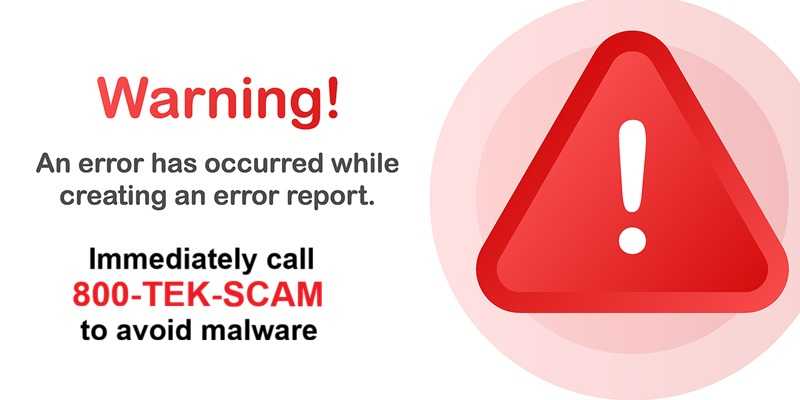
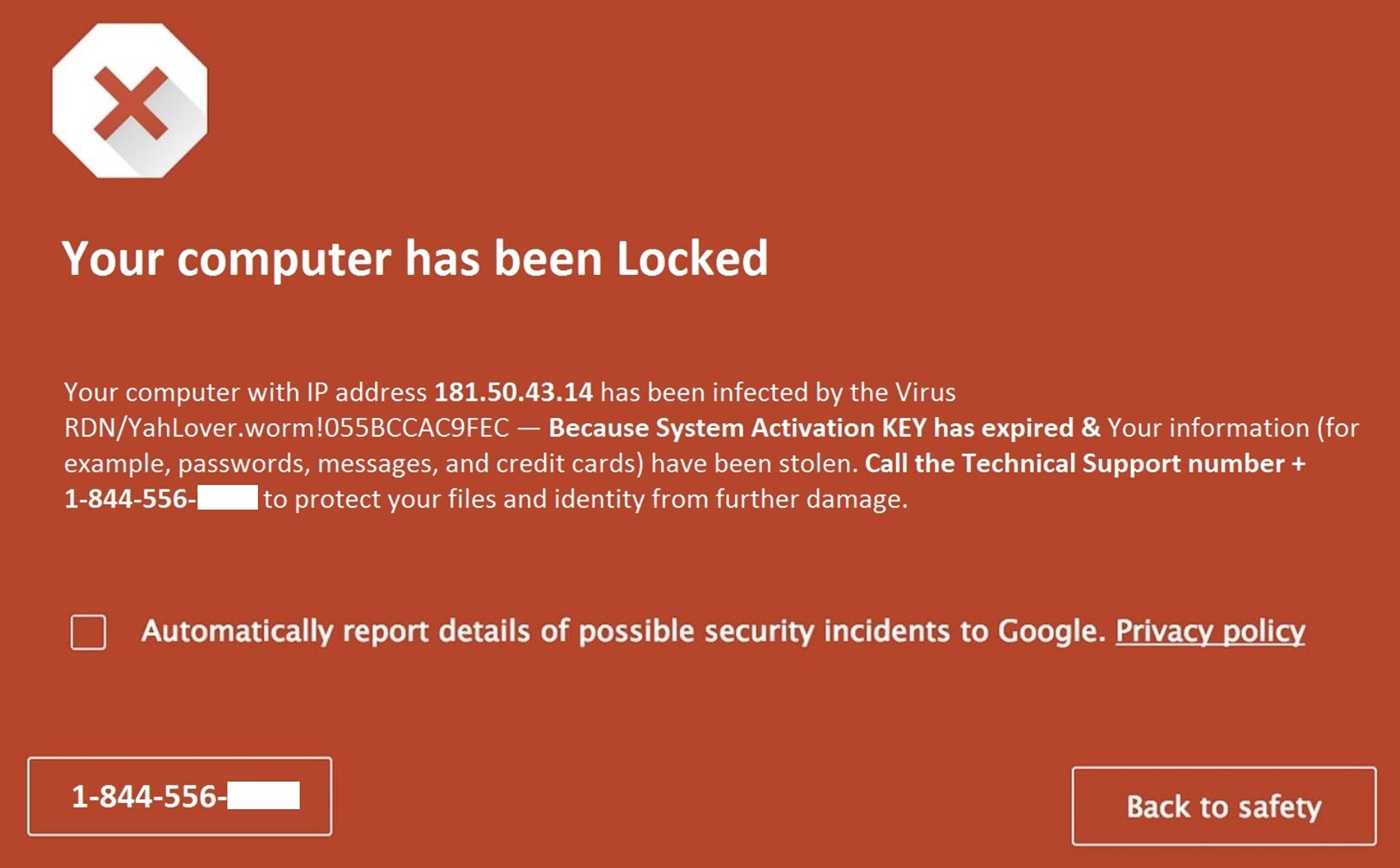
Imagine this scenario. You’re working away at your desk when your browser suddenly locks up. Maybe it flashes a warning message or an alert saying your computer has been infected with malware. The message may even tell you to call a phone number for immediate support. But, before you can even do that, your phone rings and someone claiming to be from your company’s IT department or a well-known tech company offers to help fix the issue.

And since this likely isn't your first rodeo, you already know that this is where the scam begins. In many cases, hackers deliberately trigger a browser crash or display a fake security warning designed to make it look like something is seriously wrong.

The person on the phone may sound professional and calm. They might ask you to install remote-access software so they can “repair” your computer. Once they’re connected, they can explore your system, collect login credentials, or install malware.

Researchers who discovered this attack emphasize that different from other similar types, this one relies on user interaction, such as approving remote access sessions or installing remote administration tools. AnyDesk was mentioned, but there are likely others being used. Sometimes, users were asked to enter something into a system prompt execute scripts. Don’t do it! If you do, the attackers may open a browser during remote sessions and direct you to a fraudulent Microsoft-themed interface hosted on cloud infrastructure. Specific examples were that victims were instructed to log into a fake “Outlook Antispam Control Panel” and download what was described as an “Antispam Patch.” Of course, it isn’t.

If something like this happens to you, remember that legitimate IT teams don’t typically call you out of the blue because of a browser warning. In fact, it’s unlikely they’d even know unless you told them. So, protect yourself and your organization and do not follow instructions from pop-up messages. Never install remote access tools for someone you don’t know or that you are not 100% certain doesn’t have bad intentions. Contact your company’s IT department directly using your internal help desk or official number, rather than a number that may pop up on your screen.  Restart your browser or computer if it freezes. Often, that alone will fix the issue.

Trust your internal help desk. When technology misbehaves at work, the safest move is simple. Close the suspicious page and contact your organization’s IT team through official channels.

A real support technician will be happy if you checked first. A scammer, on the other hand, is counting on you not to.


Ways To See If Your Data Has Been Stolen

Education

Ways To See If Your Data Has Been Stolen

With all the data breaches, whether by intrusion or accident lately, it’s likely your information was exposed somehow to someone you didn’t intend. After all, the marketing company Exactis, exposed hundreds of traits on us in 350 million records. Yahoo let out email addresses and passwords on billions of people, and of course who can forget the massive breach of Equifax just last year. There is a lot of information that gets leaked on us and the more the bad actors have on us, the more targeted their phishing campaigns can be. Checking on whether or not your data is available in the underground can help you mitigate any fraud or identity theft. READ FULL STORY

ClickFix Attacks Help You Hack Your Own PC

Your Security

ClickFix Attacks Help You Hack Your Own PC

PC users beware—ClickFix attacks are here. Global cybersecurity company ESET’s did some research on the topic. Its research finds ClickFix incidents are now a close second to phishing—and that’s saying something. They also found these two-faced attacks multiplied a crushing 500%+ during that same year. And they are pretty crafty in their trickery too. It’s been an invaluable hacking tool for decades since phishing tactics keep reinventing themself as technology marches on. These start with phishing, of course, and these attacks are getting more sophisticated by the day, and with help from AI. READ FULL STORY

Simple Habits That Make You a Tougher Target for Cybercrooks

Your Security

Simple Habits That Make You a Tougher Target for Cybercrooks

It’s already well into the new year and a fresh year usually brings fresh goals—exercise more, spend less, maybe try a new hobby. But one resolution that deserves a permanent spot on everyone’s list is tightening up your personal cybersecurity. Cyberthreats don’t take holidays, and scammers aren’t slowing down. In fact, they’re getting bolder, trickier, and faster at finding new ways to get into your accounts and steal your money or data. READ FULL STORY

Gmail Tech Support Exposes New Threats From AI

Your Security

Gmail Tech Support Exposes New Threats From AI

A significant cybersecurity breach involving Gmail raised alarms across the tech community late in 2024. Hackers leveraged advanced AI techniques to create a sophisticated scheme involving account recovery phishing emails that were nearly indistinguishable from legitimate communications. And, to make it even more believable, they were followed up with a phone call from a “Gmail tech support person,” throwing everyone a phishing curveball. READ FULL STORY

Hi, It’s Not Me: It's a 148% Rise in Impersonation Scams

Scams & Phishing

Hi, It’s Not Me: It's a 148% Rise in Impersonation Scams

Impersonation scams have exploded—and we’re not talking about your buddy doing a bad Elvis impression. According to the Identity Theft Resource Center’s latest 2025 Trends in Identity report, these scams have shot up a whopping 148% and are now the most-reported identity crime. The scammers? They’re posing as banks, tech support reps, and even your own family. The scary part? They’re convincing—way too convincing. Sadly, there is no shortage of examples of these. READ FULL STORY


Close
Fraud News & Alerts!

Keep up with the latest cyber security news through our weekly Fraud News & Alerts updates. Each week you will receive an email containing the latest cyber security news, tips and breach notifications.


You're all set!

You will receive your first official security update email within the next week.

A welcome email has also just been sent to you. If you do not receive this email within the next few minutes, please check your Junk box or spam filter to confirm our emails are not being blocked.


Help  
Enter any word or words you like.        

The email newsletter will arrive from news@stickleyonsecurity.com


Loading
Please wait...