Accessibility links
  • Skip to main content
News Icon NEWS FILTER
All News Scams & Phishing Your Security Mobile Security Identity Theft Corporate Security Security Education Videos
Search Icon SEARCH
 

Email Icon SUBSCRIBE TO WEEKLY NEWSLETTER
Amazon Text Scam Recalls Your Login Credentials
Facebook   X   LinkedIn   Email

Amazon Text Scam Recalls Your Login Credentials

August 21, 2026

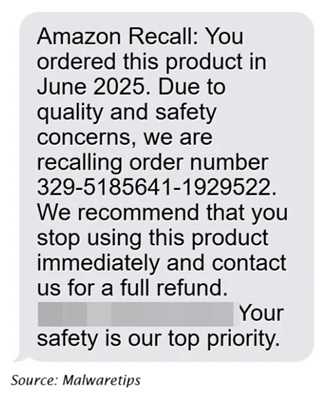
A new phishing campaign is targeting Amazon customers. While we know that Amazon is one of the most spoofed brands when it comes to attacks, this one uses fake product-recall alerts designed to steal login credentials and personal information. While it still tries good old-fashion phishing lures, it also uses a bit of a different tactic for this one. Instead of making you feel like you need to act fast or your money will be gone, it offers to give you a refund.

Cybersecurity researchers say the messages, often sent by text, claim an item you recently purchased has been recalled for safety reasons and that you’re eligible for a refund. The catch—of course there is one—you must click a link to “confirm” the recall or claim the refund. 
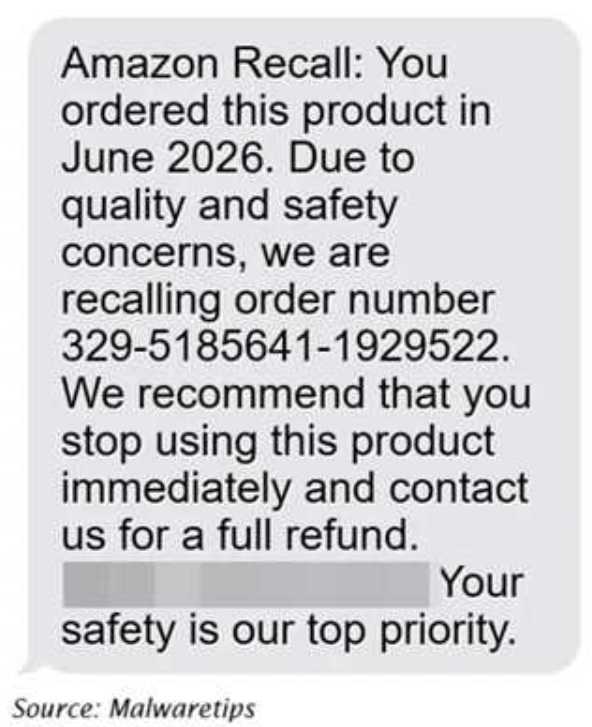
The link typically leads to a convincing but fraudulent Amazon sign-in page. Once victims enter their username and password, scammers can take control of their accounts and potentially access stored payment information. In some instances, it does go back to the sense of urgency in phishing cases, using urgent language. This one also includes fake order numbers to appear legitimate. 

Consumer-protection experts warn that Amazon rarely communicates recalls through unsolicited text messages. Instead, legitimate recall notices appear in a customer’s account message center or through official company channels. Sometimes, they make the news.

How can you avoid giving up your credentials? Well, if you receive a recall message, do not click any links or respond. Instead, log in directly to your Amazon account using the official website or mobile app to verify whether a recall actually exists. It’s likely you’ll find it doesn’t.

As online shopping continues to grow, impersonation scams like this one are becoming more sophisticated. However, the typically anti-phishing strategies still apply. If it’s not expected, don’t click the link or attachment! Staying cautious with unexpected messages and verifying alerts through trusted sources remains the best defense against losing access to your accounts or financial information.


Hi, It’s Not Me: It's a 148% Rise in Impersonation Scams

Scams & Phishing

Hi, It’s Not Me: It's a 148% Rise in Impersonation Scams

Impersonation scams have exploded—and we’re not talking about your buddy doing a bad Elvis impression. According to the Identity Theft Resource Center’s latest 2025 Trends in Identity report, these scams have shot up a whopping 148% and are now the most-reported identity crime. The scammers? They’re posing as banks, tech support reps, and even your own family. The scary part? They’re convincing—way too convincing. Sadly, there is no shortage of examples of these. READ FULL STORY

Account Takeover Fraud Steals Your Identity, Money, And More

Identity Theft

Account Takeover Fraud Steals Your Identity, Money, And More

With a significant swell in the number of those working from home, come the most historic levels of hacking the world has ever seen. Account takeover (ATO) fraud attacks have been growing yearly, accounting for much of the identity fraud-based financial losses to consumers and businesses. ATO fraud can lead to empty bank accounts and damaged reputations, and those recovering from an attack find it’s an expensive, time consuming, and frustrating task. READ FULL STORY

Common Signs Of Phishing To Keep In Mind When Your Inbox Overflows

Scams & Phishing

Common Signs Of Phishing To Keep In Mind When Your Inbox Overflows

With email phishing, deciphering what’s real from what’s fake can be a challenge. Our inboxes are stuffed with emails fighting to get our attention and get us to take some action. But how to ferret-out what’s legitimate takes some cyber-smarts. Research shows email is the primary method of spreading 92% of all malware, and the U.S. is the target of 86% of all email phishing attacks. Whether at home or at work, email phishing is relentless, but being aware of characteristics they have in common can be a powerful tool. READ FULL STORY

What Is A Brushing Scam?

Scams & Phishing

What Is A Brushing Scam?

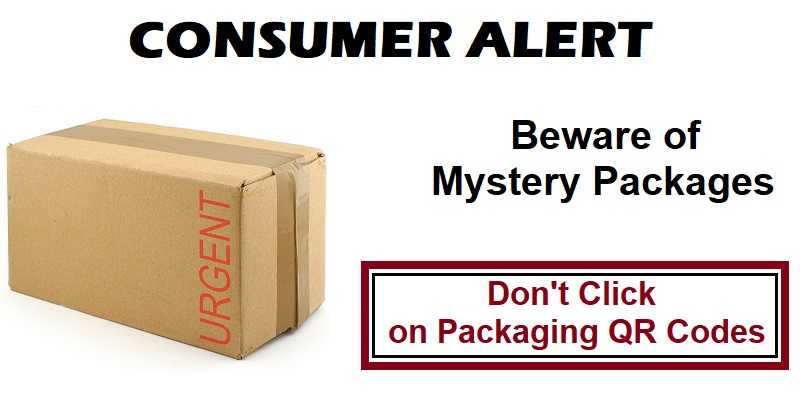
We haven’t talked about brushing scams much of late. However, there is one happening now that is significant enough that the FBI’s IC3 unit issued a warning about it. It involves mystery packages being delivered to your home with no information about where they came from and though many are harmless, some make that bargain you thought you were getting vastly more expensive. And to make it easier for you to fall for the scam, a convenient QR code is inside so you can solve the mystery easily and deliver your money to the scammers too. READ FULL STORY

Watch For This Credential Stealing Scam on X

Scams & Phishing

Watch For This Credential Stealing Scam on X

A sophisticated phishing campaign is targeting X (formerly Twitter) users with fraudulent DMCA copyright infringement notices designed to steal login credentials and compromise accounts. Security experts warn that these fake messages appear convincing, but are actually elaborate traps set by cybercriminals. If you use that service, be on the lookout. While you may not use anything you think violates the DMCA, many people do when posting videos, images, or using music in their posts. However, even if you don't do that, you could still see this scam. READ FULL STORY


Close
Fraud News & Alerts!

Keep up with the latest cyber security news through our weekly Fraud News & Alerts updates. Each week you will receive an email containing the latest cyber security news, tips and breach notifications.


You're all set!

You will receive your first official security update email within the next week.

A welcome email has also just been sent to you. If you do not receive this email within the next few minutes, please check your Junk box or spam filter to confirm our emails are not being blocked.


Help  
Enter any word or words you like.        

The email newsletter will arrive from news@stickleyonsecurity.com


Loading
Please wait...