Accessibility links
  • Skip to main content
News Icon NEWS FILTER
All News Scams & Phishing Your Security Mobile Security Identity Theft Corporate Security Security Education Videos
Search Icon SEARCH
 

Email Icon SUBSCRIBE TO WEEKLY NEWSLETTER
Do You Use Google Search? Your Next Download Could Be Infected
Facebook   X   LinkedIn   Email

Do You Use Google Search? Your Next Download Could Be Infected

February 3, 2026

Think you're safe downloading software from the top Google search results? Think again. FortiGuard Labs discovered a massive SEO (that’s Search Engine Optimization) poisoning campaign, primarily targeting Chinese-speaking users, but the tactics being used could easily spread to English-speaking audiences next…and as is typically the case, they likely will. 

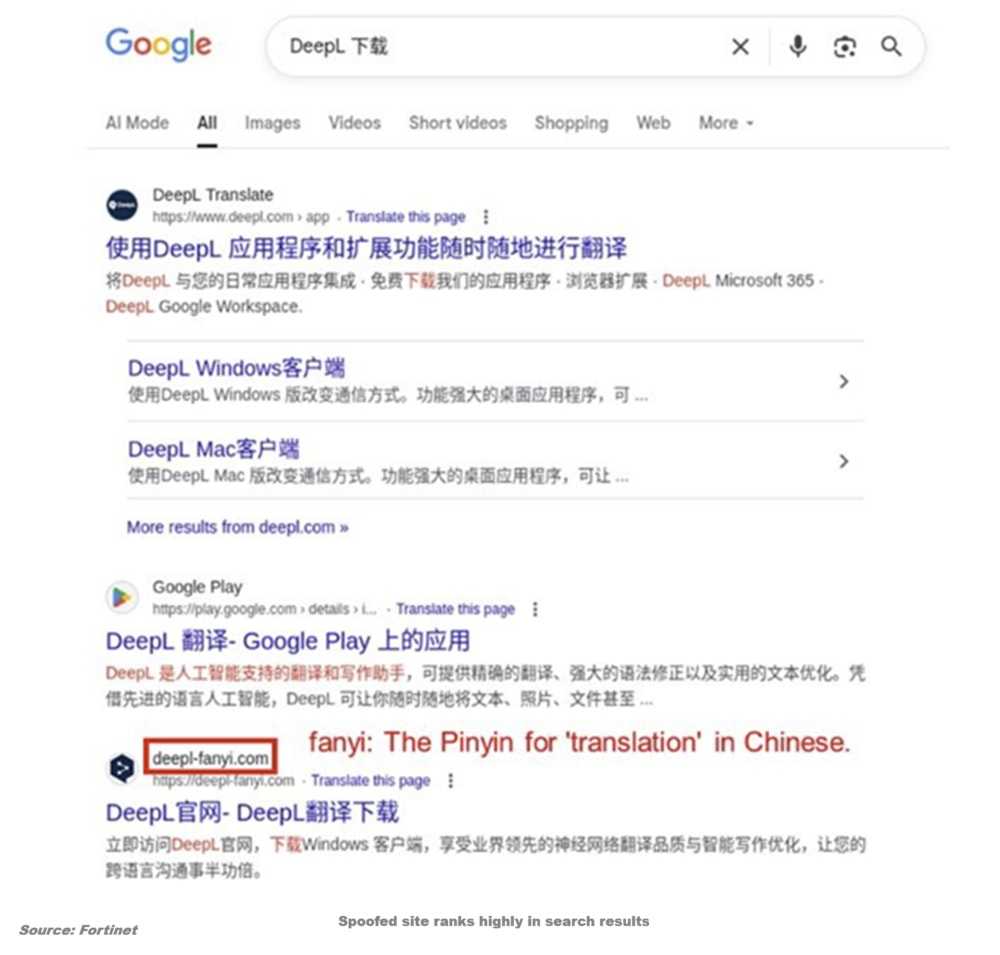
Here's how the scam works: Cybercriminals create fraudulent websites that look almost identical to legitimate software providers and use special plugins to artificially bump these fake sites to the top of search rankings when you type something into the address window. When unsuspecting users click what appears to be a trustworthy download link for popular apps like DeepL, Signal, WhatsApp, Chrome, or Telegram, they're actually getting a malicious installer.

The really scary part? These installers combine both the legitimate software and malicious components, so everything appears to work normally while malware silently infects your system in the background. Attackers registered lookalike domains and used subtle character substitutions to mislead users, making the fake sites nearly impossible to distinguish from the real thing at first glance. So, you got the product you wanted so of course, wouldn’t ask any questions.
What The Malware Does

Once installed, the attack delivers powerful malware families including Hiddengh0st and Winos, which are variants of remote access trojans. These give hackers complete control over infected computers, allowing them to steal sensitive information, log keystrokes, monitor your screen, hijack cryptocurrency wallets, and establish ongoing access to your system.

The malware also seems to be able to detect if it's being analyzed and discovered. It checks for virtualized environments and if detected, it simply shuts down and leaves no trace.

How To Protect Yourself

Don't trust search engine rankings alone. Always verify you're on the official website by carefully examining the domain name for subtle misspellings or character substitutions. These are “1” in place of a lower case “L,” for example. When possible, navigate directly to a company's website rather than clicking search results. Before downloading any software, double-check the URL and look for signs of legitimacy like proper SSL certificates and official company information. If it looks odd, trust your gut.

SEO poisoning attacks are becoming increasingly common because they work. Hackers know we trust Google's top results, and they're exploiting that trust to distribute malware at scale. Stay vigilant, and remember: if you're searching for software downloads, the safest bet is always going directly to the official source.


Overlays For Androids For Criminal Convenience

Mobile Security

Overlays For Androids For Criminal Convenience

Android Overlays are a powerful feature in the Android operating system. Theses allow apps to display content over other apps or over the system user interfaces. Ultimately this results in the user experience being more, well, user-friendly. So why is it important? This is useful in many ways, such as for displaying persistent notifications, those cheeky Android chat heads that float around the screen, or for using accessibility features. But those handy capabilities can also be misused by cybercriminals to create deceptive interfaces, tricking you. READ FULL STORY

Is Your Computer Hacked? The Clues and Tips You Should Know

Your Security

Is Your Computer Hacked? The Clues and Tips You Should Know

Wondering if your computer might be a hacking victim is an uneasy feeling at best. The signs and symptoms are there, and you need to know what they are and what to do about them. It’s a kind of one-two punch to hackers from you and your device. But there are clues that help you decide if someone other than you has had access to your computer. Treating a hacked computer begins with preventing one in the first place. It takes a promise to use cyber-smarts daily, and bolstering your device with security software. READ FULL STORY

Got a Shiny New Connected Gadget? Do These Safety Steps First

Your Security

Got a Shiny New Connected Gadget? Do These Safety Steps First

If you unwrapped a brand-new internet-connected device this holiday season, you’re not alone. Smart gadgets, tablets, gaming systems, and home devices are hotter than ever—but before you dive in and start exploring, there are a few must-do safety steps to keep cybercrooks out of your digital space. Even if you’ve already set it up, it’s worth double-checking that you didn’t miss anything. Once you’ve checked all these boxes, enjoy your new tech with confidence—knowing you’ve taken the right steps to keep your digital world safe. READ FULL STORY

Wanted! Nighttime Bandit Steals PII Using Google Ads

Scams & Phishing

Wanted! Nighttime Bandit Steals PII Using Google Ads

Users that are searching for popular software have recently become the targets of malvertising which leverages Google Ads to install Trojan versions of Raccoon Stealer and Vidar. These malware versions are sneakily hidden within Google advertising…you know; those advertisements you see on the side of your browser window or plastered all over social media. This bandit, if clicked, will then proceed to install malware on your device. Guardio Labs has dubbed this "MasquerAd." Clever, isn't it? READ FULL STORY

Is Sideloading Worth The Risk Of Downloading Malware?

Your Security

Is Sideloading Worth The Risk Of Downloading Malware?

It’s been well-known that sideloading apps is a risky proposition. Just ask the 20 million Aptoide users who recently learned their personally identifiable information (PII) was posted online by a hacker. Aptoide, a popular third-party app “discovery platform” had its database hacked earlier this month. The cybercriminal behind the hack claims that in addition to the 20 million exposed data files, there’s an additional 19 million files in their possession. Whether that’s true or not remains a mystery for now, but the Aptoide incident shows (in a huge way) why app sideloading is risky at best and is not recommended by security professionals. READ FULL STORY


Close
Fraud News & Alerts!

Keep up with the latest cyber security news through our weekly Fraud News & Alerts updates. Each week you will receive an email containing the latest cyber security news, tips and breach notifications.


You're all set!

You will receive your first official security update email within the next week.

A welcome email has also just been sent to you. If you do not receive this email within the next few minutes, please check your Junk box or spam filter to confirm our emails are not being blocked.


Help  
Enter any word or words you like.        

The email newsletter will arrive from news@stickleyonsecurity.com


Loading
Please wait...