Accessibility links
  • Skip to main content
News Icon NEWS FILTER
All News Scams & Phishing Your Security Mobile Security Identity Theft Corporate Security Security Education Videos
Search Icon SEARCH
 

Email Icon SUBSCRIBE TO WEEKLY NEWSLETTER
ClickFix Attacks Help You Hack Your Own PC
Facebook   X   LinkedIn   Email

ClickFix Attacks Help You Hack Your Own PC

October 9, 2026

PC users beware—ClickFix attacks are here. Global cybersecurity company ESET’s did some research on the topic. Its research finds ClickFix incidents are now a close second to phishing—and that’s saying something. They also found these two-faced attacks multiplied a crushing 500%+ during that same year. And they are pretty crafty in their trickery too.

ClickFix attacks trick you into hacking your own PC.

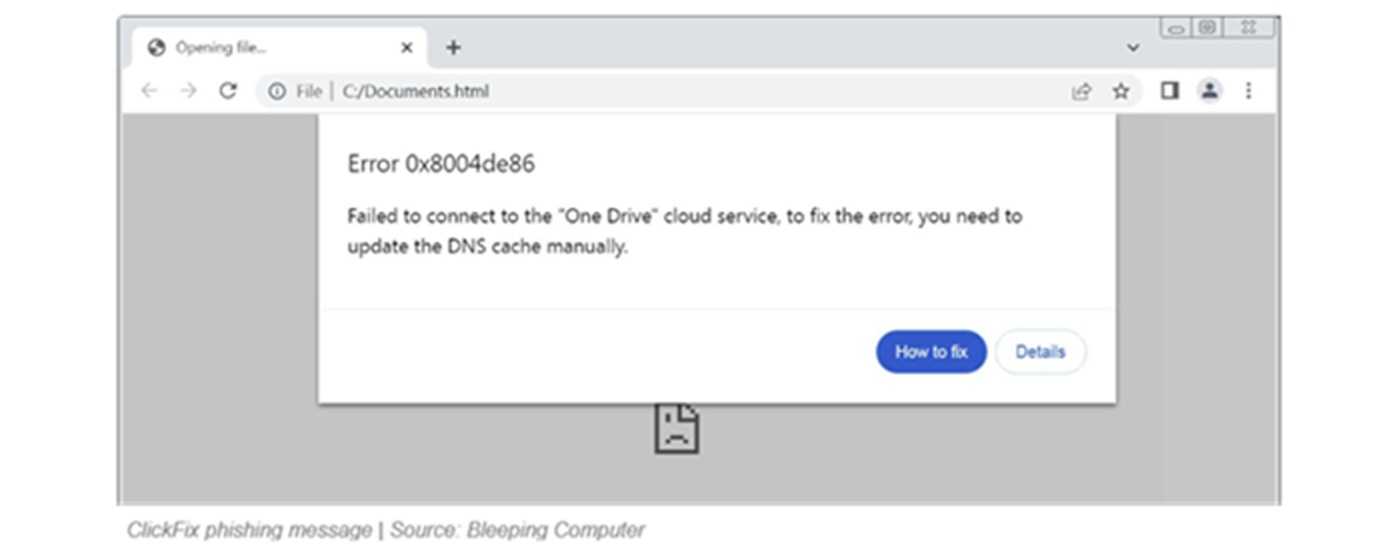
These attacks begin with phishing emails, phishing websites and fake reCaptcha’s. Taking the bait results in an “error message” on your device. Even more alarming, the message also tells a victim “You’re the only one who can fix it.” Once you take the bait, you’re also told the following steps will “fix the security error.” Unfortunately, those directions won’t ever fix the security error. That’s because there never was an error to begin with. Instead, what it means is the victim just handed their self-hacked PC to the attacker. 
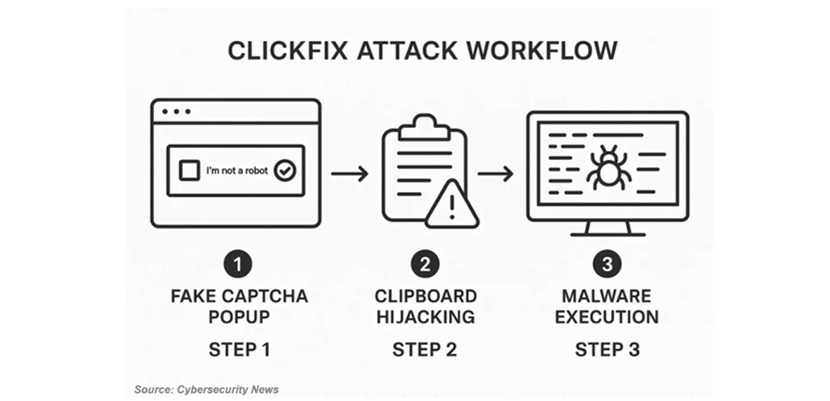
Spotting A ClickFix Strike

Keeping your phishing cyber-smarts set on high helps avoid ClickFix and other phishing attacks. Knowing a setup when you see one also goes a long way for safety. If there’s one particular thing to look for with ClickFix attacks no matter how it’s delivered or worded, there’s always a hacker message or direction to: 

Press the Windows Key + “R” and then paste “Ctrl+V” then “Enter.”  

Whatever you do, don’t do it! If you do, you’ll end up doing the hacker’s job for them.
It’s well known that over 90% of cyberattacks begin with phishing. It’s been an invaluable hacking tool for decades since phishing tactics keep reinventing themself as technology marches on. These attacks are getting more sophisticated by the day, and with help from AI there’s no telling what’s next. 

ClickFix is one of the latest episodes in the long line of phishing attacks aiming to catch us off guard. And since we don’t know what’s coming at us next, keep your phishing red flags waving and never take the bait.


Fake Update Ads Steal Your Passwords

Scams & Phishing

Fake Update Ads Steal Your Passwords

We know the cyber-cheats are always out there using every trick in the book to steal our money, identities and whatever else they can get their hands on. So, the next time you’re alerted to a software update, especially one appearing in an online ad, it’s time to step back and take a closer look before tapping “Download.” A latest malvertising campaign lures users into downloading a fake software update. The now custom, improved malware is being used at this very moment and surely will continue doing damage well into the new year. READ FULL STORY

Protect Yourself From Phishing Scams: 8 Steps To Better Security

Scams & Phishing

Protect Yourself From Phishing Scams: 8 Steps To Better Security

Since the mid 1990’s, email phishing scams have been on the rise. Like most cybercrimes, hackers have improved and refined their phishing methods over time. Now, there’s been a massive increase in targets due to the continuing coronavirus epidemic. Email phishing continues to be the method of choice for many cybercriminals to enter your device, steal your data, identity, finances, and more. A study by Tessian finds that 96% of phishing attacks arrive via email, showing the threat is very real. READ FULL STORY

Email And Clickbait Lead To Facebook Trouble

Scams & Phishing

Email And Clickbait Lead To Facebook Trouble

In 2022, there were more than 333 billion email messages exchanged. That’s according to the website Statista. And of those, roughly 36% are spam. While most email products are fairly good at detecting and sorting out spam for us, many unwanted messages still make it past the filters and into our inboxes. Many of those lead to scams, downloaded malware, or cause some other type of digital harm. But the scams and malware don’t stop at email spam. READ FULL STORY

Not All Cookies Are Created Equal; Know When Not To Accept Them

Your Security

Not All Cookies Are Created Equal; Know When Not To Accept Them

It seems every webpage you land on these days has an “Accept Cookies” pop-up. After all, what’s the big deal about a few cookies, so we click “Accept” and move on. Well, turns out it’s a bigger deal to accept cookies than most users realize. Thinking twice before you accept them can help keep malicious and zombie cookies off your device, among other things. Who would ever think a few innocent cookies could be a bad thing, but unfortunately, many of them are. READ FULL STORY

LastPass Users Targeted by Fake Backup  Phishing Scam

Scams & Phishing

LastPass Users Targeted by Fake Backup Phishing Scam

LastPass users are being targeted by phishing emails urging “urgent vault backups” before fake maintenance. These messages aim to steal master passwords by leading victims to counterfeit sites. Attackers are sending deceptive emails claiming LastPass will perform scheduled maintenance and that users must “backup your password vault within 24 hours.” It’s no surprise that it leads to phishing sites designed to capture your master password. READ FULL STORY


Close
Fraud News & Alerts!

Keep up with the latest cyber security news through our weekly Fraud News & Alerts updates. Each week you will receive an email containing the latest cyber security news, tips and breach notifications.


You're all set!

You will receive your first official security update email within the next week.

A welcome email has also just been sent to you. If you do not receive this email within the next few minutes, please check your Junk box or spam filter to confirm our emails are not being blocked.


Help  
Enter any word or words you like.        

The email newsletter will arrive from news@stickleyonsecurity.com


Loading
Please wait...