Accessibility links
  • Skip to main content
News Icon NEWS FILTER
All News Scams & Phishing Security Education Videos Mobile Security Your Security Education Identity Theft Corporate Security
Search Icon SEARCH
 

Email Icon SUBSCRIBE TO WEEKLY NEWSLETTER
Holiday Shopping May Be Over but the Scams Aren’t
Facebook   X   LinkedIn   Email

Holiday Shopping May Be Over but the Scams Aren’t

January 1, 2026

Think the shopping season ends on December 25? Not even close. Retailers launch a whole new wave of promotions: after-holiday blowouts, New Year deals, clearance events, and anything else they can dream up to keep shoppers clicking. But while stores ramp up the marketing, cybercriminals ramp up their tricks — especially domain-jacking and typosquatting. And during this busy online shopping stretch, more people than ever are falling for them.

Domain-jacking and typosquatting happen when scammers register fake websites that look almost identical to popular retailers or banking sites. The goal? Dupe you into handing over your login credentials, payment information, or personal data — or infect your device with malware. Some of these copycat sites are so convincing that you won’t spot the difference unless you look very closely.

The trick is simple: they rely on typos or subtle substitutions. A misplaced letter, an extra character, or a swapped symbol can send you straight to a scam site. Think barnesandnobles.com instead of the real version that does not include the "s," or replacing a lowercase “l” with a number “1” in website names. These small changes are almost invisible at a glance. Cybercriminals especially love targeting online banking and checkout pages because the information you type there is pure gold on the dark web.
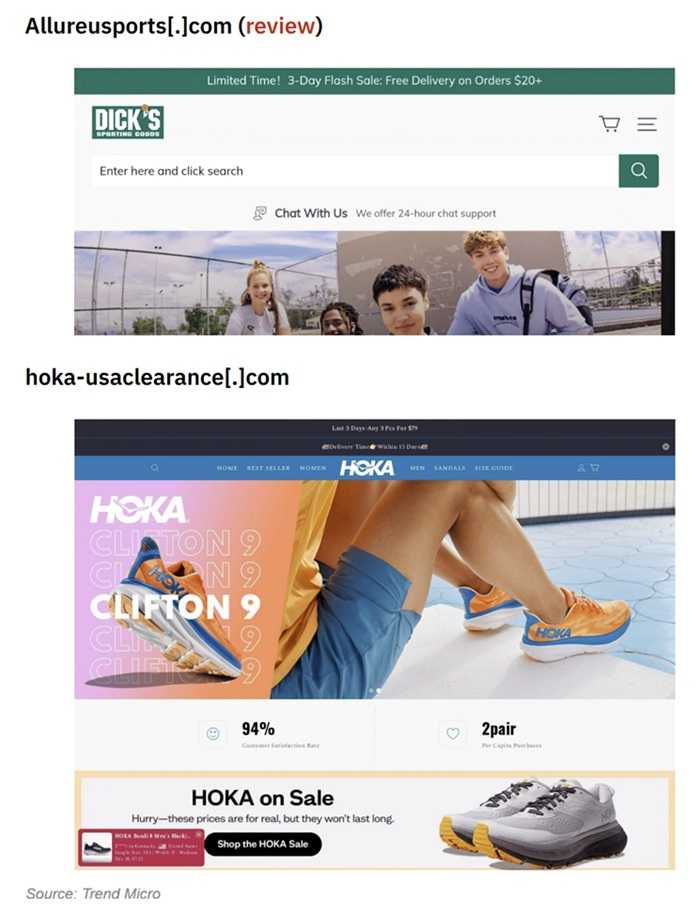
Before you shop or enter anything sensitive online, take a moment to double-check the URL. Avoid clicking links from emails, texts, social media ads, or pop-ups — even if they look legit. Type the site name into your browser yourself, but do it carefully. One wrong keystroke can send you to a malicious page capable of downloading malware instantly, a tactic known as a drive-by download.

Protect yourself by keeping all your devices — phones, tablets, laptops — equipped with updated antivirus and anti-malware software. It doesn’t matter the operating system; attackers don’t discriminate by operating system.

And remember: if something about a website feels off, stop. Don’t enter any personal or payment information until you’ve confirmed the site is legitimate. A few seconds of caution can save you from identity theft, account takeover, and a whole world of pain and frustration.

Don’t let attackers steal the joy from your post-holiday deals. Stay vigilant and shop smart all year-round.


Facebook, Instagram Shopping Scams Run Wild And Rake In Millions

Scams & Phishing

Facebook, Instagram Shopping Scams Run Wild And Rake In Millions

Data recently released by the Federal Trade Commission (FTC) shows that the number of complaints about social media shopping scams more than tripled over the last year. Consumers reported losing more than $117 million to this type of scam in just the first six months of 2020 compared to $134 million for all of 2019, according to the FTC’s latest Consumer Protection Data Spotlight. The social media sites overwhelmingly involved in these scams are Facebook and Instagram, with consumer scam reports totaling 94% of all rip-offs involving a specific platform. READ FULL STORY

Shop for Clues of Failing Grades While Back-to-School Shopping

Scams & Phishing

Shop for Clues of Failing Grades While Back-to-School Shopping

There are so many scams out there preying on us these days, and many of them are targeting our online shopping. Now that it’s back to school time, if you’re shopping for supplies, returning items online, or just participating in some online retail therapy regardless of the time of year, here are a few tips to help identify fraudulent shopping websites and how to avoid giving up your personal information, whether it’s your payment card details, your address, or any other bit of PII that a cybercriminal may find useful. READ FULL STORY

BBB Warns of 'Card Declined' Scam Targeting Consumers, Urges Vigilance

Scams & Phishing

BBB Warns of 'Card Declined' Scam Targeting Consumers, Urges Vigilance

The Better Business Bureau (BBB) recently issued a warning about the rising "card declined" scam, which is tricking unsuspecting consumers. According to a report by USA Today, individuals shopping online have been receiving messages claiming that their transaction has been declined, even if they are completely surprised as to why. But, what’s a shopper to do when they really want that item they're hunting for? Use another card, of course! READ FULL STORY

Don’t Get Grinched! Holiday Scams And How To Avoid Them

Scams & Phishing

Don’t Get Grinched! Holiday Scams And How To Avoid Them

There’s an army of grinches out in full force this holiday season, so you’d better watch out or you just might need a good cry. It’s well known the holiday season brings scammers out of the woodwork. And now with artificial intelligence (AI) seeping into the fabric of scams, it may be more difficult than ever to separate the legit from the not. Before you dive head-first into the holiday season, take a look at some of the scams hoping to catch us off guard. READ FULL STORY

Look Before You Buy! eBay Marketplace Scams; How To Spot And Avoid Them

Scams & Phishing

Look Before You Buy! eBay Marketplace Scams; How To Spot And Avoid Them

Cyber-scams are everyday threats, especially in the world of online marketplace shopping. It happens often and to anyone, as we learned from the historic spike in online scams during coronavirus lockdowns and beyond. Now, eBay’s popular e-commerce marketplace is increasingly a target for cyber-scams and scammers. The company has taken an active step protecting their users by publishing scam warnings on their website. It includes spotting the red flags and tips on avoiding their most frequent scams. READ FULL STORY


Close
Fraud News & Alerts!

Keep up with the latest cyber security news through our weekly Fraud News & Alerts updates. Each week you will receive an email containing the latest cyber security news, tips and breach notifications.


You're all set!

You will receive your first official security update email within the next week.

A welcome email has also just been sent to you. If you do not receive this email within the next few minutes, please check your Junk box or spam filter to confirm our emails are not being blocked.


Help  
Enter any word or words you like.        

The email newsletter will arrive from news@stickleyonsecurity.com


Loading
Please wait...