Accessibility links
  • Skip to main content
News Icon NEWS FILTER
All News Scams & Phishing Security Education Videos Mobile Security Your Security Education Identity Theft Corporate Security
Search Icon SEARCH
 

Email Icon SUBSCRIBE TO WEEKLY NEWSLETTER
Gmail Tech Support Exposes New Threats From AI
Facebook   X   LinkedIn   Email

Gmail Tech Support Exposes New Threats From AI

February 2, 2025

A significant cybersecurity breach involving Gmail raised alarms across the tech community late in 2024. Hackers leveraged advanced AI techniques to create a sophisticated scheme involving account recovery phishing emails that were nearly indistinguishable from legitimate communications. And, to make it even more believable, they were followed up with a phone call from a “Gmail tech support person,” throwing everyone a phishing curveball.

The short version of the story is that a security consultant nearly got fooled by this phishing scam, once again demonstrating how even the tech savvy among us can fall victim to phishing attacks.
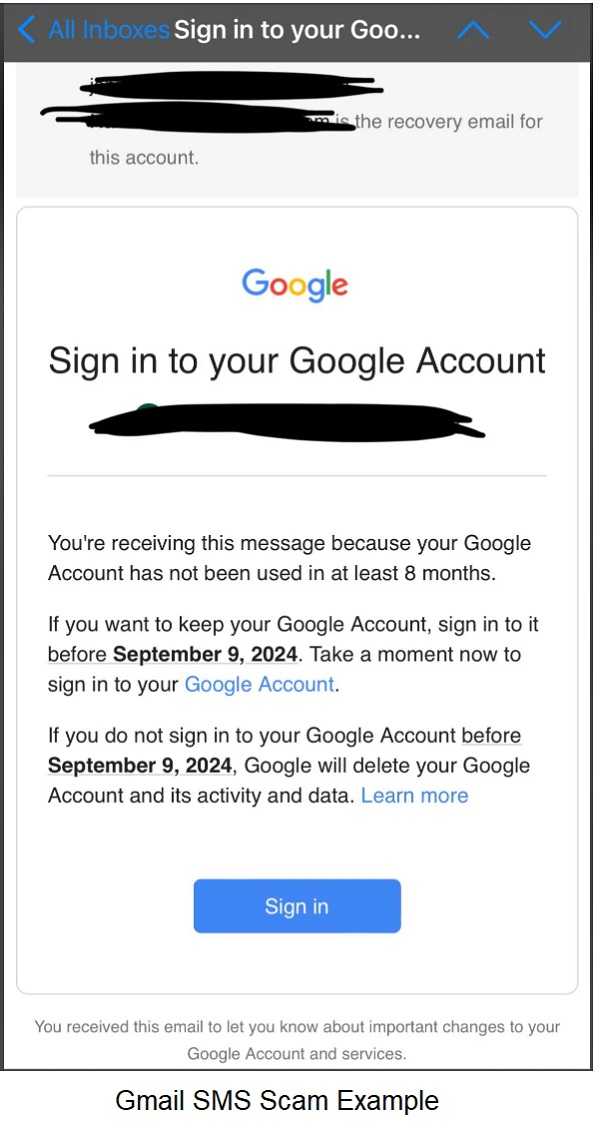
Now, phishing is not new, but coupling it with a friendly tech support follow up phone call definitely is. And spoiler alert! That friendly tech support person wasn’t even real.

The AI model used in this attack analyzed patterns in previous email communications, adapting its language and style to mimic the way trusted senders typically communicate. This personalization made recipients more likely to click on malicious links or divulge sensitive information.

The important takeaway here is not to willy-nilly give up any sensitive information. If you didn’t request to recover your account, you should definitely raise your eyebrow in suspicion. Don’t click any links in emails regarding the subject unless you very recently requested to do a password reset or otherwise recover your account. This applies to any account, not just Gmail. If in doubt at all, go directly to Gmail’s webpage and contact the company that way. Don’t give information over the phone to an unsolicited caller.

In response, Google quickly implemented enhanced security measures, including improved spam filters and AI-driven anomaly detection systems. Users were urged to enable two-factor authentication and remain vigilant against suspicious emails, even if they appeared genuine. If you have to consider for a second that it may not be real, you should investigate further.

This incident underscored the growing threat posed by AI in cybercrime, illustrating how quickly attackers can adapt their strategies. As technology evolves, so too must our defenses, emphasizing the need for ongoing education and awareness in cybersecurity practices.


Amazon “Free Stuff” Brushing Scam Makes Victims Pay The Price

Scams & Phishing

Amazon “Free Stuff” Brushing Scam Makes Victims Pay The Price

Open your front door and there they are, boxes from Amazon you weren’t expecting. The thought of getting free stuff might give you a giggle, but the truth is, the last laugh could be at your expense. That’s because you’ve just been pulled into a “brushing” scam using you and Amazon to work. Brushing scams are happening more often than ever before, and a closer look at them shows how free stuff could end up costing you. If you find yourself the target of a brushing scam, it means the scammer already has enough of your PII to involve you. READ FULL STORY

Account Takeover Phone Scam

Scams & Phishing

Video Icon Account Takeover Phone Scam

Nobody thinks they will fall victim to a scammer on the phone. Today I am talking with Tanya Holland over at Park View Credit Union and not only are people falling victim, scammers are adding more layers to the basic Vishing attacks. If you find this helpful, please share to warn others! READ FULL STORY

Unsubscribing From Newsletters? Beware Of Phishing Afterward

Scams & Phishing

Unsubscribing From Newsletters? Beware Of Phishing Afterward

Newsletters can be a very easy way to stay informed about news, events, special offers, and a whole lot more. But they also seem to appear in your inbox without your authorization, for a whole host of reasons. And if you don’t want them, often, clicking the "unsubscribe" link is enough to stop receiving them, however, not always. There are dangers when you do that too, including phishing attacks, downloaded malware, or merely just what may seem like never-ending spam. READ FULL STORY

Job Search Scams Trending Upwards; Always Look Before You Leap

Scams & Phishing

Job Search Scams Trending Upwards; Always Look Before You Leap

Getting the job of your dreams is what many of us wish for. However, knowing the difference between a real opportunity and a scam offer can keep job seekers safe from the clutches of cyber-crooks looking to reel them in. After days and weeks of online job searches, that perfect job may now be just a click away. But that's not the time to dive in headfirst. The FBI weighed in on fake employment scams, referring to them as an old trick with big improvements. READ FULL STORY

43% of Fraudulent Financial Transactions are Authorized

Your Security

43% of Fraudulent Financial Transactions are Authorized

Financial transactions are increasingly under attack according to financial institutions (FIs). They report 43% of all fraudulent transactions involving customers are in the category called “authorized fraud.” This fraud not only costs FIs financially, but some customers lose trust in their FI and that leads to customer retention problems. Fortunately, there’s new optimism using AI (artificial intelligence) and ML (machine learning) to combat the escalating problem of authorized fraud. READ FULL STORY


Close
Fraud News & Alerts!

Keep up with the latest cyber security news through our weekly Fraud News & Alerts updates. Each week you will receive an email containing the latest cyber security news, tips and breach notifications.


You're all set!

You will receive your first official security update email within the next week.

A welcome email has also just been sent to you. If you do not receive this email within the next few minutes, please check your Junk box or spam filter to confirm our emails are not being blocked.


Help  
Enter any word or words you like.        

The email newsletter will arrive from news@stickleyonsecurity.com


Loading
Please wait...