Accessibility links
  • Skip to main content
News Icon NEWS FILTER
All News Scams & Phishing Security Education Videos Mobile Security Your Security Education Identity Theft Corporate Security
Search Icon SEARCH
 

Email Icon SUBSCRIBE TO WEEKLY NEWSLETTER
ITRC Warns to Watch for AI Phishing Scams
Facebook   X   LinkedIn   Email

ITRC Warns to Watch for AI Phishing Scams

August 20, 2025

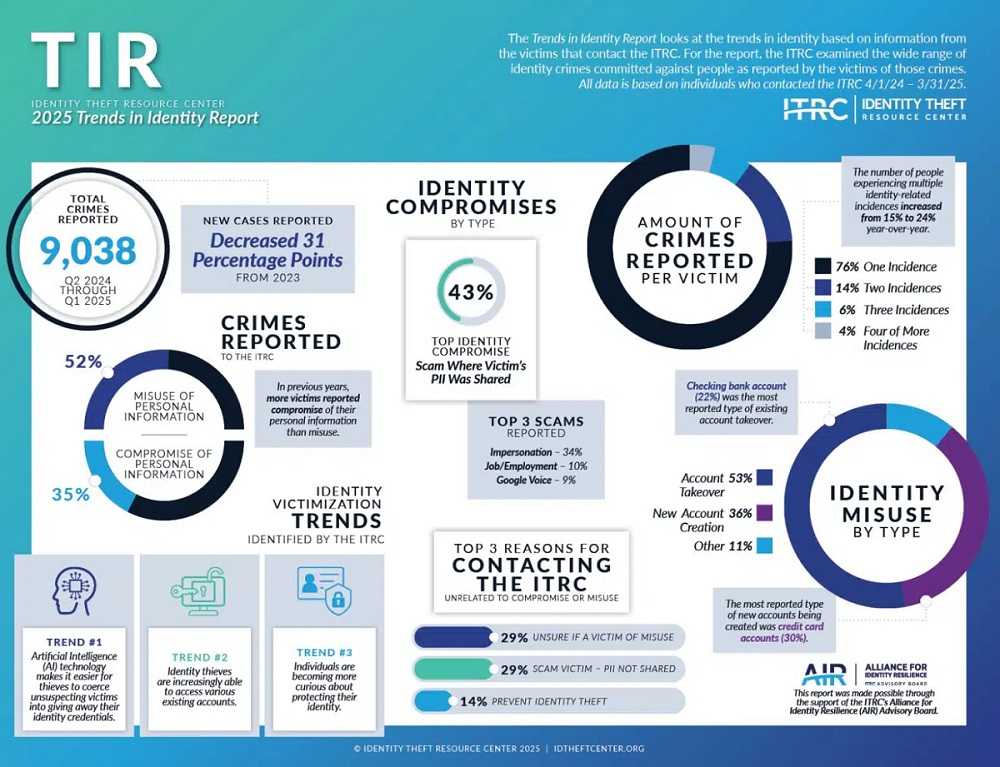
The Identity Theft Resource Center (ITRC) is sounding the alarm in its June 2025 report: AI is not only ours, but also the scammer’s best friend. As artificial intelligence tools become more powerful, accurate, and accessible, identity thieves are leveraging it as often as we are. But while we might be using it to find out what fruit has a poisonous pit or create the perfect Caribbean vacation itinerary, they are using the same tools to create highly convincing, personalized scams—and it’s working.

Gone are the days of clumsy phishing emails filled with typos and broken links. Today’s fraudsters are using AI to mimic official logos, copy writing styles, and even generate deepfake voices or video messages that appear to come from real companies—or worse, your friends and family. Have you received a desperate call from a niece or nephew pleading for financial help when in another country? Many of us have and now, those are accentuated by AI. These tactics blur the line between real and fake, making it easier than ever to trick victims into handing over sensitive data like passwords, Social Security numbers, and financial details.
So, it’s always a good idea to remember to be on the lookout for phishing. While these tools can make extremely realistic scams, there are a couple of dead giveaways that something may be a phishing lure:

  • A sense of urgency that you might miss out on a deal, something bad may happen, or any message that gives you a sense of anxiety.
  • You receive texts, emails, or phone calls from unsolicited parties that include links, attachments, or instructions to provide information that you are not expecting or if they want personally identifying information (PII) or details that make you feel uncomfortable.

The ITRC notes that while reports of identity crimes appear to be down overall, the scams themselves are becoming more targeted, professional, and damaging. Impersonation scams are just the beginning. Criminals are feeding stolen data into AI systems to customize attacks with shocking detail, making them harder to detect and even harder to ignore.

This shift highlights the need for constant vigilance. As AI grows smarter, so must consumers. That means being cautious of unsolicited messages, verifying identities independently, and staying updated on common scam tactics. The ITRC warns that identity protection now requires more than a strong password—it demands a healthy dose of skepticism, acute awareness, and tech-savvy thinking.

AI has definitely changed the cybersecurity game. The question isn’t if someone will try to trick you—but when, and how ready you’ll be.


AI Aided Phishing Scams Target Business Execs

Scams & Phishing

AI Aided Phishing Scams Target Business Execs

AI-powered bots are now capable of analyzing vast amounts of data from online profiles. This enables them to craft emails that closely mimic the tone and style of a company or individual. This level of personalization makes the scams more convincing and harder to detect. So, it’s no surprise that there's been a notable surge in highly personalized phishing scams aimed at corporate executives. These scams are becoming increasingly sophisticated and succeeding, largely due to the integration of artificial intelligence (AI) by cybercriminals. READ FULL STORY

AI Generated Fraud Takeover

Your Security

AI Generated Fraud Takeover

As cybercrime is known to do, attacks trend over time, creating new and improved assaults. Fighting back against trending fraud attacks requires everyone, including organization leaders and those overseeing security to be prepared for the latest threats. And with artificial intelligence (AI) now playing a significant role with these crimes, awareness can be an invaluable fraud prevention tool. AI-generated deepfakes make “authorized fraud” a must know of trending crimes. Phishing emails orchestrate 91% of all cyberattacks, with many starting and ending with fraud. READ FULL STORY

FBI Warns of IC3 Impersonation Scam

Scams & Phishing

FBI Warns of IC3 Impersonation Scam

It’s getting ugly now. The FBI is now warning about a growing scheme where crooks are pretending to be employees from its own Internet Crime Complaint Center (IC3). And they’re not just sending shady emails—they’re popping up everywhere: On social media, in forums, even on phone calls. The FBI has been tracking this scam since December of 2023. So, it's not new, but it is likely to continue moving around for the foreseeable future; and likely in different forms. READ FULL STORY

Is That Email Alert From Google Security Or Is It Phishing?

Scams & Phishing

Is That Email Alert From Google Security Or Is It Phishing?

These days, scam emails are getting tougher to spot. This is especially true with the use of artificial intelligence (AI) such as ChatGPT, Copilot, Gemini, and the like. And now, Google is in the hot seat with a spotlight on email phishing. Bad actors are sending these emails signed by Google and look 100% legitimate. Hackers are exploiting two Google vulnerabilities allowing them to phish using Google’s name. A closer look at this phishing scam will help you tell the difference going forward. READ FULL STORY

These Scams Are Heading Your Way

Scams & Phishing

These Scams Are Heading Your Way

This year’s top scams are bigger and better than ever. Phishing scams hit new heights during the pandemic and show no signs of slowing down. The FBI’s Internet Crime Complaint Center (IC3) received over 2.1 million complaints from scam victims last year. The most common reports were about imposter scams, but that’s just the tip of the iceberg. The FTC finds that last year, the financial cost of these fraudulent scams was more than $3.3 billion. READ FULL STORY


Close
Fraud News & Alerts!

Keep up with the latest cyber security news through our weekly Fraud News & Alerts updates. Each week you will receive an email containing the latest cyber security news, tips and breach notifications.


You're all set!

You will receive your first official security update email within the next week.

A welcome email has also just been sent to you. If you do not receive this email within the next few minutes, please check your Junk box or spam filter to confirm our emails are not being blocked.


Help  
Enter any word or words you like.        

The email newsletter will arrive from news@stickleyonsecurity.com


Loading
Please wait...