Accessibility links
  • Skip to main content
News Icon NEWS FILTER
All News Scams & Phishing Security Education Videos Mobile Security Your Security Education Identity Theft Corporate Security
Search Icon SEARCH
 

Email Icon SUBSCRIBE TO WEEKLY NEWSLETTER
Agencies Warning Gmail, Outlook, and Apple Mail Users of Fire-Related Scams
Facebook   X   LinkedIn   Email

Agencies Warning Gmail, Outlook, and Apple Mail Users of Fire-Related Scams

February 16, 2025

As with all catastrophes and other disasters and big events, scammers seem to come out of the ashes to take advantage of empathizers among us. In the aftermath of the recent California wildfires, cybercriminals are exploiting the situation to target users of Apple Mail, Gmail, and Outlook with sophisticated scams. These malicious actors are leveraging the urgency and emotional impact of the disaster to deceive well-intentioned individuals.

Phishing Emails and Fake Donation Requests

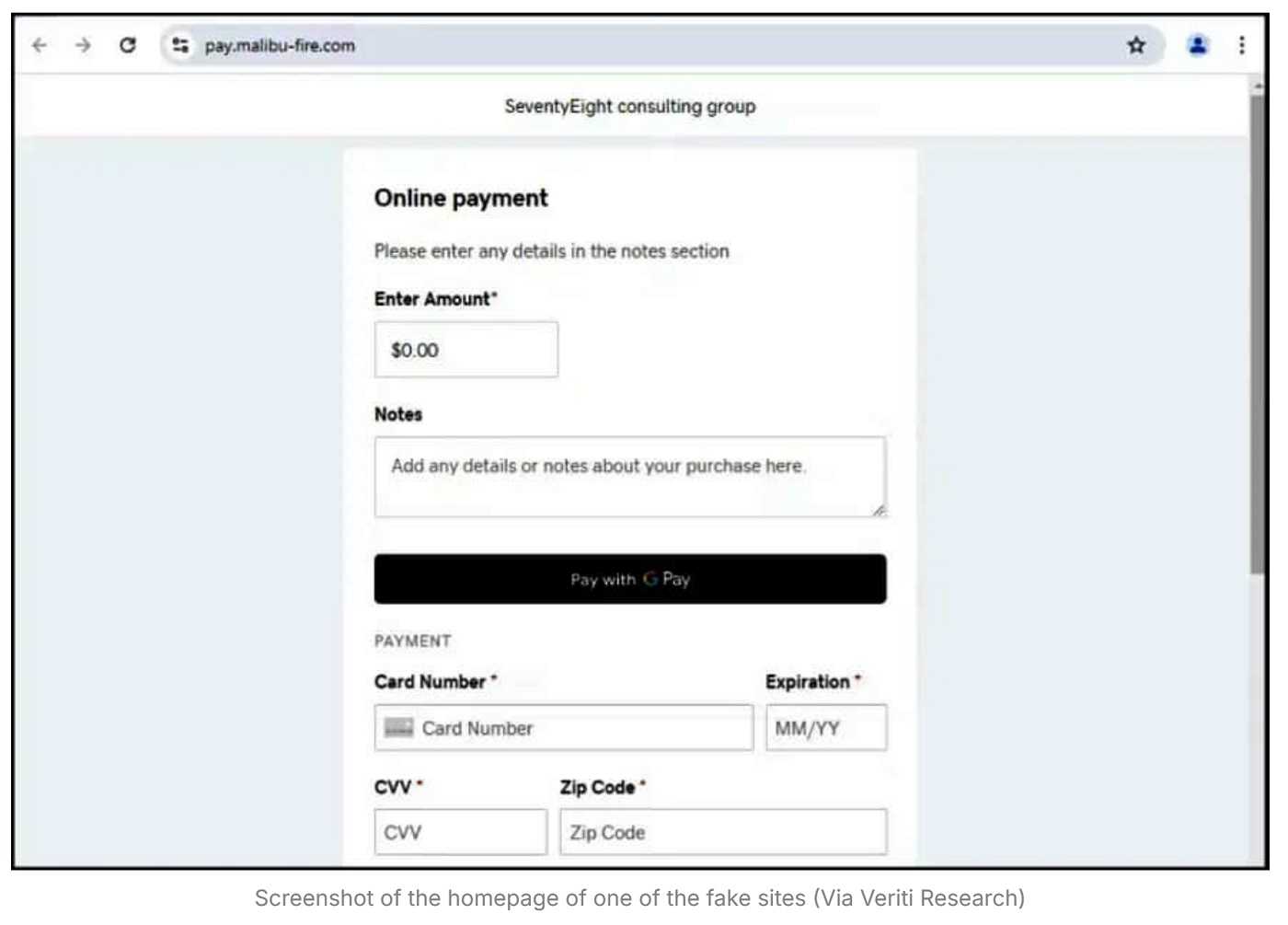
Scammers are sending phishing emails that appear to come from legitimate organizations, urging recipients to donate to wildfire relief efforts. These emails often contain links to fraudulent websites designed to steal personal and financial information. The California Cybersecurity Integration Center (Cal-CSIC) has issued warnings about such wildfire-themed phishing attempts. It included screenshots of some of the scams using the wildfires as a lure in its PSA (CAL-CSIC-202501-006).

AI-Driven Personalization

Recent reports highlight that cybercriminals are using AI tools to craft hyper-personalized emails, making it increasingly difficult for users to identify fraudulent messages. These emails may reference specific details gleaned from social media and other public sources, enhancing their credibility.
Fake Crowdfunding Campaigns

There have also been instances of fraudulent crowdfunding campaigns, such as fake GoFundMe pages, purportedly raising funds for wildfire victims. These scams exploit the goodwill of individuals looking to help those affected by the fires.

Some of the identified phony domains are:

  • malibu-fire[.]com
  • fire-relief[.]com
  • Calfirerestoration[.]store
  • fire-evacuation-service[.]com
  • Lacountyfirerebuildpermits[.]com
  • Pacificpalisadesrecovery[.]com
  • boca-on-fire[.]com
  • palisades-fire[.]com
  • palisadesfirecoverage[.]com

Protective Measures

To safeguard yourself from these scams, consider the following steps:

  • Verify Before Donating: Before contributing to any charity or crowdfunding campaign, research the organization to confirm its legitimacy. Use trusted platforms and be cautious of unsolicited requests for donations. Don’t use links provided in email, but find them on your own.
  • Be Wary of Unsolicited Emails: Exercise caution with emails requesting personal information or urging immediate action. Verify the sender's authenticity and avoid clicking on suspicious links or attachments.
  • Enable Multi-Factor Authentication (MFA): Implement MFA on your email and other critical accounts to add an extra layer of security against unauthorized access. Do this with each online account when its available.
  • Stay Informed: Keep abreast of official communications from reputable sources regarding relief efforts and potential scams. This includes Cal-CSIC.

By remaining vigilant and following these best practices, you can protect yourself and ensure that your support reaches those truly in need during this challenging time.


How Being Human Makes Us Targets For Online Scams

Your Security

How Being Human Makes Us Targets For Online Scams

Being human comes with certain attributes cybercriminals love to exploit. In the world of online scams, our willingness to trust others can easily translate to a scam’s success. And since we can’t help being human, we need to keep in mind that scammers exploit our humanity to their benefit. But as humans, we can also spot an attempted scam when we see one. It’s important to know that no one is too smart or cyber-savvy to fall for some of the tricks scammers have up their sleeves. READ FULL STORY

Examples Of Common Smishing Scams

Scams & Phishing

Video Icon Examples Of Common Smishing Scams

According to Verizon, one of the leading telecommunications companies, smishing (SMS phishing) is an increasingly prevalent form of cyber-attack targeting mobile phone users. Smishing messages are deceptive text messages that aim to trick individuals into divulging sensitive information or performing harmful actions. Verizon has identified several common types of these types of messages that users should be aware of to protect themselves from falling victim to these scams. READ FULL STORY

Olympic Games Bring Olympic Sized Cybercrime

Scams & Phishing

Olympic Games Bring Olympic Sized Cybercrime

The torch will soon arrive in Paris! It’s nearly time again when sports fans and occasional watchers come together to watch in pubs, or plant themselves into their favorite easy chairs to take the opportunity to scream into the television for the worldwide frenzy that is the Olympic Games. It’s likely to be no different this summer when the games take place in Paris. With fans rooting for their favorite athletes and teams to win, cyber attackers are in prime condition seeking out their own potentially winning opportunities. READ FULL STORY

Candy Scammers Use Your Phone And Zelle To Steal Your $$$

Scams & Phishing

Video Icon Candy Scammers Use Your Phone And Zelle To Steal Your $$$

A woman sitting at a New York City café was approached by two kids selling candy for a supposedly worthy cause. That’s when the two candy scammers went to work pulling her into their scheme. The end result for the victim was having all the funds in her banking account stolen; not just $5 for a candy bar. That’s how easily this scam started, and she learned the hard way about smartphone scam security and P2P (peer-to-peer) payment apps like Zelle. READ FULL STORY

Creative Hacking Underscores The Need For MFA

Your Security

Creative Hacking Underscores The Need For MFA

Attackers are getting more creative by the day. It's more important than ever before with so many bad actors out there to make all of your accounts ultra-secure. That means that using some method of multifactor authentication (MFA) is in order. Case in point: Recently, there was an elaborate scheme targeting unsuspecting users that would perhaps not have been victims, had MFA been enabled. The attackers sent spam email promoting fake sweepstakes where recipients were encouraged to put their credentials into a form. READ FULL STORY


Close
Fraud News & Alerts!

Keep up with the latest cyber security news through our weekly Fraud News & Alerts updates. Each week you will receive an email containing the latest cyber security news, tips and breach notifications.


You're all set!

You will receive your first official security update email within the next week.

A welcome email has also just been sent to you. If you do not receive this email within the next few minutes, please check your Junk box or spam filter to confirm our emails are not being blocked.


Help  
Enter any word or words you like.        

The email newsletter will arrive from news@stickleyonsecurity.com


Loading
Please wait...