Accessibility links
  • Skip to main content
News Icon NEWS FILTER
All News Scams & Phishing Security Education Videos Mobile Security Your Security Education Identity Theft Corporate Security
Search Icon SEARCH
 

Email Icon SUBSCRIBE TO WEEKLY NEWSLETTER
WhatsApp Screen-Mirroring Scam Draining Bank Accounts
Facebook   X   LinkedIn   Email

WhatsApp Screen-Mirroring Scam Draining Bank Accounts

December 9, 2025

There’s a new scam making the rounds on WhatsApp, and it’s costing people big. Criminals are using screen-mirroring tricks to get access to your most sensitive information—financial details, one-time passcodes (OTP), and even full control of your device.

Here’s how it works: The fraudster usually poses as an employee from your financial institution or tech support agent. They’ll contact you over WhatsApp and convince you there’s a “problem” with your account. To fix it, they pressure you into sharing your screen or downloading a remote-access app. The moment you comply, the scammer can see everything—your logins, one-time passwords, and PINs. In some cases, they even sneak in malware to record keystrokes, giving them continued access long after the call ends. Victims have reported money vanishing from their accounts and their identities being hijacked.
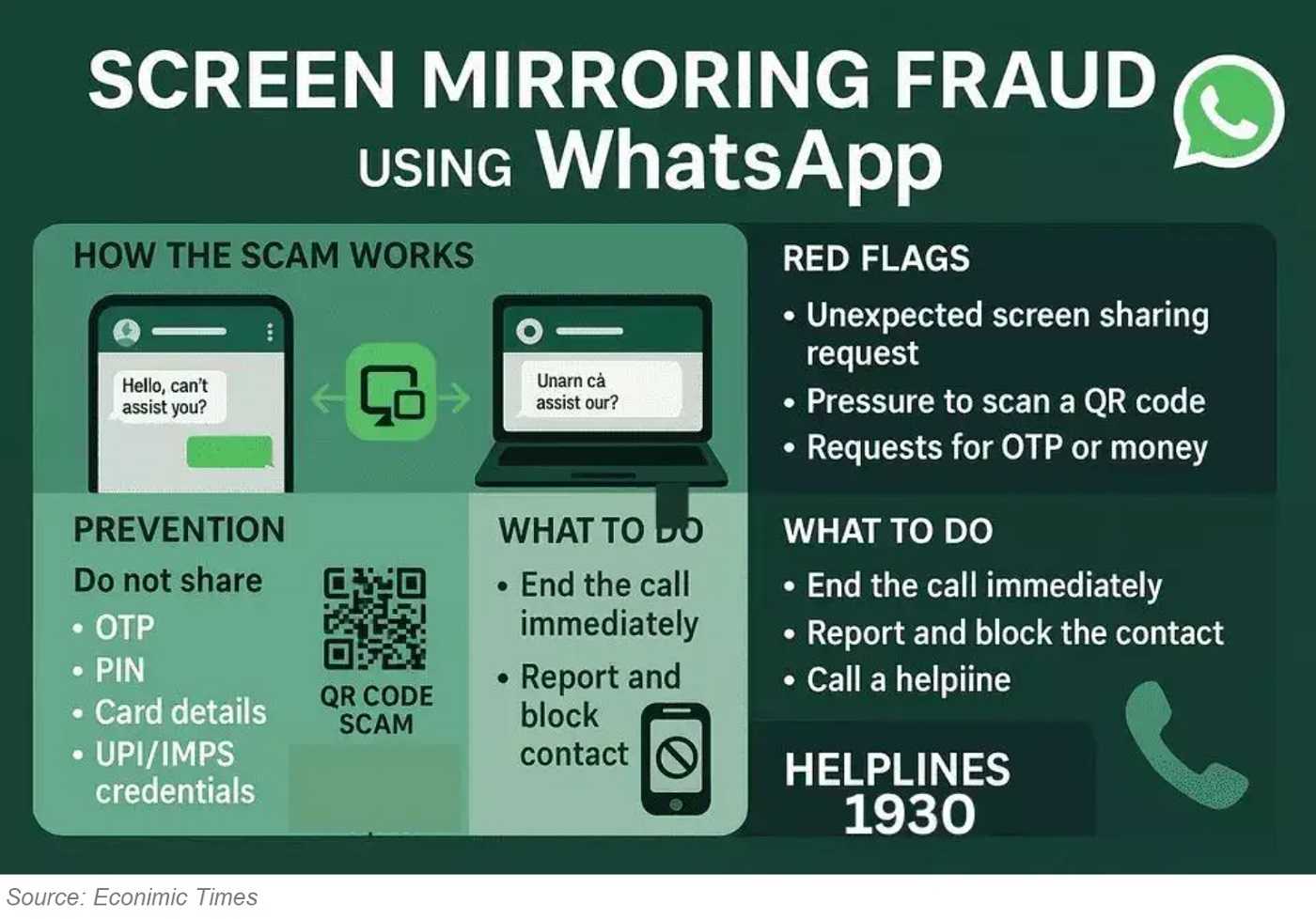
So how do you avoid becoming the next victim? Keep these tips in mind:

  • Never share your screen with anyone you don’t know—especially over WhatsApp or any social media or chatting app.
  • Financial institutions will never ask you to install apps or screen-share to resolve an issue. They also won’t ask you for login information.
  • Hang up and call your financial institution directly using the official number if you get a suspicious request. Find this on the website that you have bookmarked or from a number you trust.
  • Don’t enter OTPs or passwords while on a call with anyone claiming to “help.” This is especially true if you did not initiate the call for assistance.
  • Stay updated by keeping your phone and apps patched and making sure you have antivirus software installed and kept up-to-date.

This scam relies on panic and trust. The best defense is slowing down, questioning requests, and remembering that if someone’s rushing you into screen-sharing, making you feel anxious, or just triggering your sixth sense, they’re likely rushing to steal your money.


Shimming Right Along To Skim Your Payment Card Number

Education

Shimming Right Along To Skim Your Payment Card Number

By now, most of us have at least one or two EMV (Europay, MasterCard, Visa) cards. These are the payment cards that were touted as far more secure than the ones with the magnetic strips on the backs. And indeed, if you ask Visa these cards have resulted in a 75% decrease in fraud in the three years since they were introduced. Cybercriminals are of course finding ways to take advantage of the EMV cards too. Now, there are reports of a new way to skim. READ FULL STORY

WhatsApp Scammers Take Advantage Of Your Loved Ones

Mobile Security

WhatsApp Scammers Take Advantage Of Your Loved Ones

If you receive a WhatsApp message from a loved one asking for financial help, it’s a very good idea to become a bit of a private investigator before turning over any funds. The popular chatting/phoning/video calling app has been taking a beating lately and once again it’s the tool cybercriminals are using to get to your money. And they are pulling out the best of their social engineering and manipulation tactics to do it.  This time, it’s by masquerading as loved ones on WhatsApp. READ FULL STORY

Did Your Kid Lose Their Phone? Not Likely

Scams & Phishing

Did Your Kid Lose Their Phone? Not Likely

It’s an everyday scene. It’s prime time for TV and you’re sitting comfortably in your favorite chair. Suddenly, your phone alerts you to a new text. You pick it up and it’s a text from an unknown number that says, "Hi Mom, I lost my phone. Text me back at this number.” You’re perplexed. What do you do? Well, you stop right there. Why? That message probably isn’t from your kid. It’s part of a sneaky scam that’s been making the rounds for a while, and unfortunately, it’s still working. READ FULL STORY

Social Media Free Giveaway Scams Come With Hefty Costs

Scams & Phishing

Social Media Free Giveaway Scams Come With Hefty Costs

That $750 you were promised for filling out a survey was never intended to be paid but is in fact a giveaway scam you just fell for. You may think there’s no real harm in filling out a bogus survey, but the real thing about these scams is that it’s stealing your PII (personally identifiable information). The enduring and timeless nature of scam giveaways show that, people don’t change much when it comes to getting something for nothing. READ FULL STORY

Accounts Drained By Zelle Smishing Scam

Mobile Security

Accounts Drained By Zelle Smishing Scam

From time to time, scammers come up with a new tactic using new technology, new events, or whatever they can to continue tricking us into giving up our personal or confidential information. Over the past few years and with the increasing use of texting and SMS messaging, a newer one in the bag of tricks has been coined as “smishing.” Because it’s text, it often catches people off guard and causes them to react quickly, which is exactly what you shouldn’t do. READ FULL STORY


Close
Fraud News & Alerts!

Keep up with the latest cyber security news through our weekly Fraud News & Alerts updates. Each week you will receive an email containing the latest cyber security news, tips and breach notifications.


You're all set!

You will receive your first official security update email within the next week.

A welcome email has also just been sent to you. If you do not receive this email within the next few minutes, please check your Junk box or spam filter to confirm our emails are not being blocked.


Help  
Enter any word or words you like.        

The email newsletter will arrive from news@stickleyonsecurity.com


Loading
Please wait...